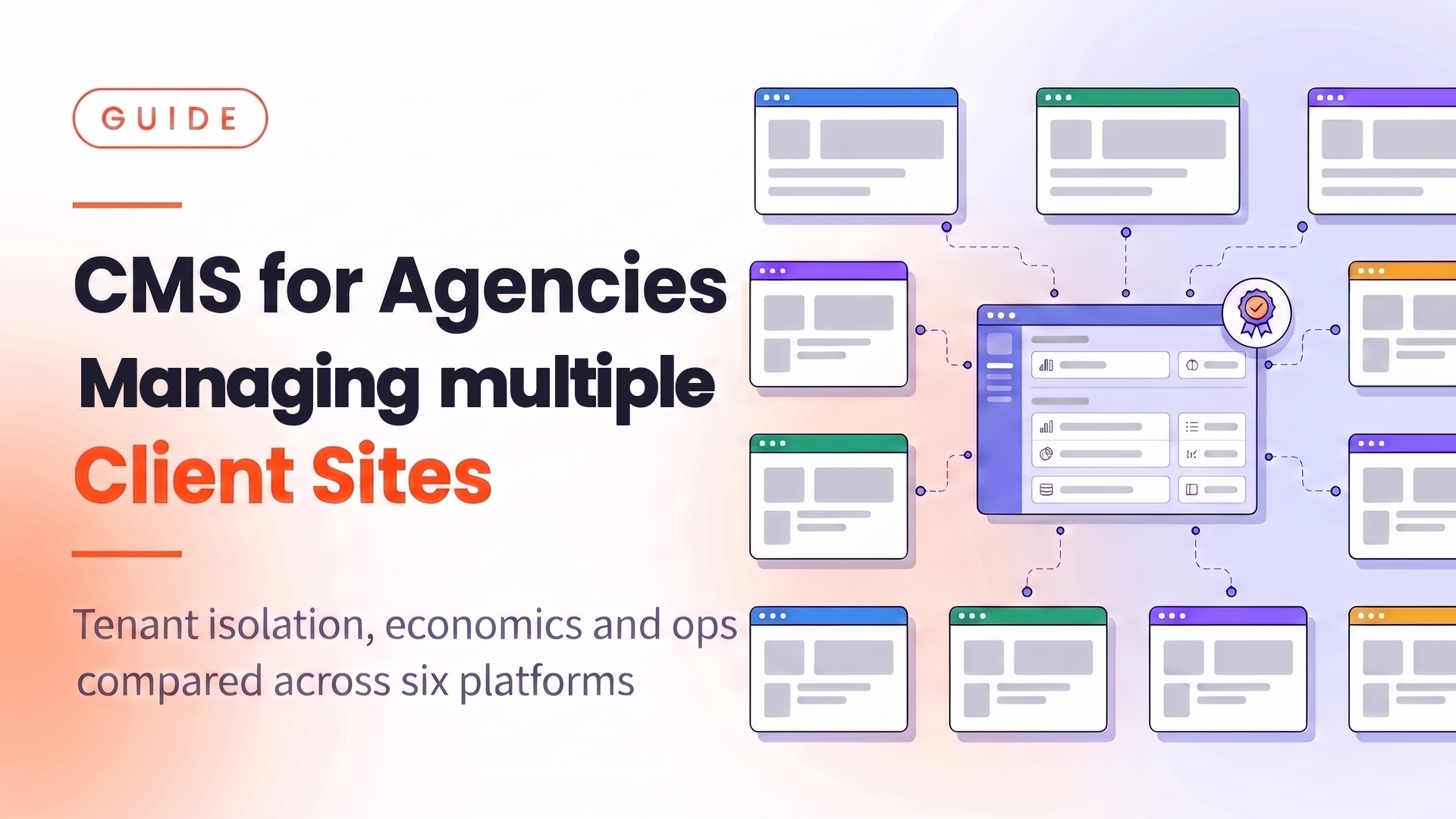
Best CMS for Agencies Managing Multiple Client Sites
We compare six CMS platforms on tenant isolation, per-site cost and ops overhead to find the best fit for agencies running many client sites.
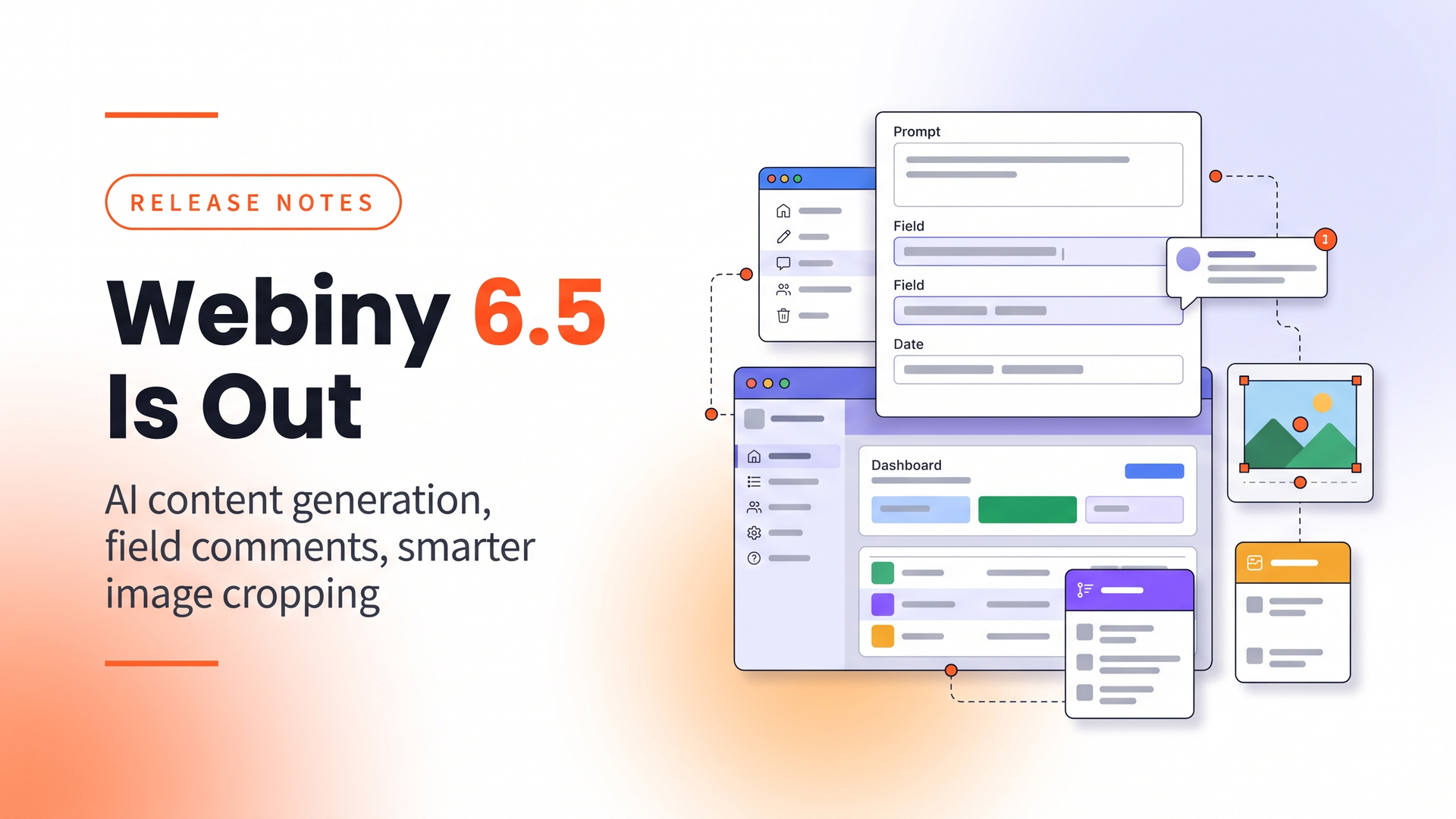
Webiny 6.5 Is Out: AI Content Generation, Smarter Image Cropping, and More for Editors and Developers
Webiny 6.5 adds AI-generated entries from prompts or files, field-level comments, image focal points and timezone-aware scheduling.
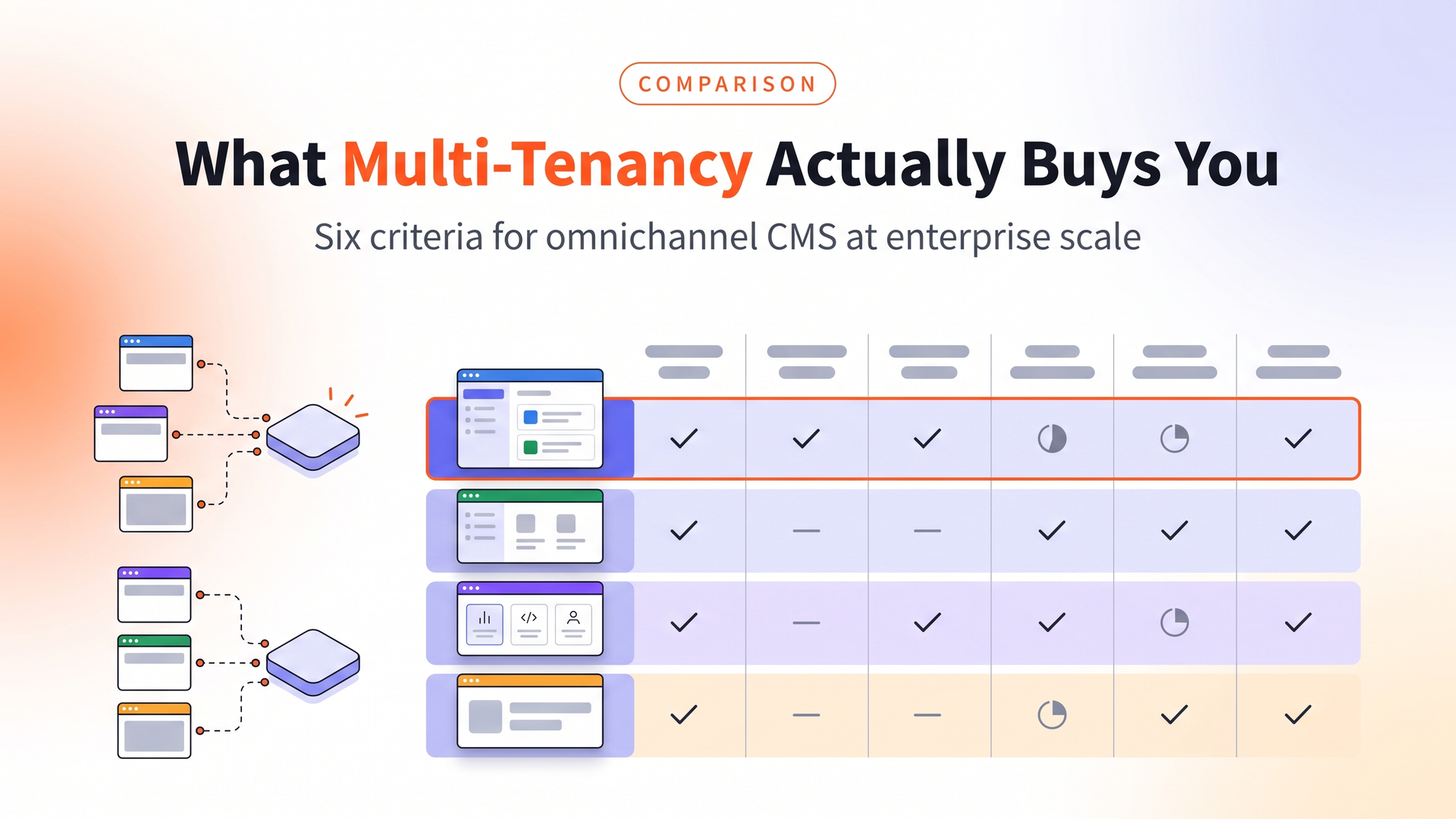
Omnichannel CMS at Enterprise Scale: What Multi-Tenancy Actually Buys You
Most best multi-tenancy CMS lists rank platforms by tenant count. That misses what matters at enterprise scale, how the platform handles hundreds of brands, regions, and sites as tenants. Here are the criteria to evaluate on, and how the leading platforms hold up.
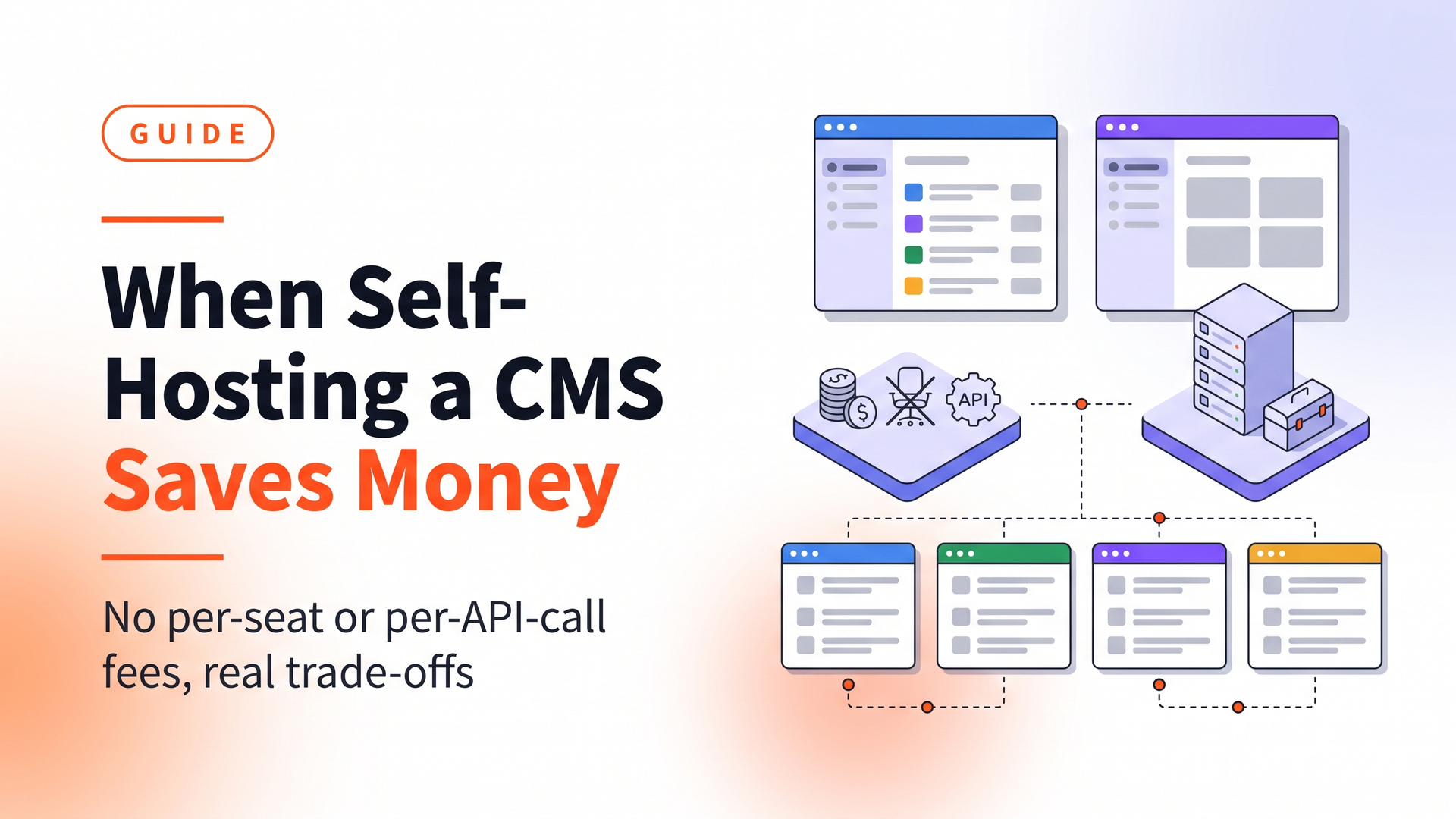
When Self-Hosting a Headless CMS Saves Money (and When It Doesn't)
Compares Strapi, Payload, Directus, and Webiny on infrastructure floor and hidden operational cost to show when self-hosting a headless CMS actually pays off.

Webiny v6: An AI-Programmable CMS Built for Complexity
The way software gets built is shifting, and the platforms that benefit are the ones with the right technical foundation. Webiny v6 — new project structure, built-in MCP server, Website Builder, SDK, and more — is built for that reality.

Build vs. Buy: Why Open Source Is Emerging as the Smarter Third Option
The classic “build vs. buy” decision is no longer enough in today’s fast-moving enterprise landscape. Open source offers a smarter third option, combining speed, control, and flexibility. Especially in the CMS space, platforms like Webiny let enterprises move fast, customize deeply, and stay in control of their data and roadmap.

The Open Source Advantage for Enterprise: Build Faster. Scale Smarter. Break Free.
Learn why enterprises are embracing open source to gain control, cut costs, and scale faster. Discover how open-source tools enable secure, customizable, vendor-free digital transformation.

Headless CMS: The Hype, The Reality, The Mis-Sold Dream
Headless CMS promised freedom but delivered complexity, hidden costs, and greater developer dependency. Instead of empowering marketers, it slowed them down. This article exposes the pitfalls of headless CMS and introduces a better way forward—flexible, scalable, and truly marketer-friendly content management.

Introducing the New Delete Model and Content Feature in Webiny Headless CMS
This new feature empowers users to permanently delete a content model and all its associated data directly from the user interface without any engineering support or complex scripts.

New Feature: Record Locking: Enhancing Collaboration in Webiny Headless CMS
The Record Locking mechanism in Webiny Headless CMS version 5.40 ensures that only one user can edit a content entry at a time, preventing accidental data overwrites or loss.

New Feature: Trash Bin for Headless CMS
In digital content creation, accidental deletions can derail projects and cause frustration. To address this, Webiny introduces the Trash Bin feature in version 5.40, providing a safety net against data loss.

Building a Notion Clone with Next.js and Webiny: Part 1 - Webiny infrastructure Setup
In this tutorial, we will build a Notion clone with Next.js and Webiny. In this first article, we'll introduce the project and guide you through setting up the Webiny infrastructure.