Selecting a Headless CMS: What "AI-Ready" Actually Requires
A framework for evaluating headless CMS platforms against AI readiness, covering API surface, data residency, MCP servers, and platform governance.
Choosing a CMS for White-Label SaaS: The Multi-Tenancy Questions That Matter
Five architecture questions on tenancy, isolation, and cost that decide whether a CMS survives 500 white-label tenants.
Headless CMS for React: Which Architectural Trade-offs Are You Choosing?
A criterion-by-criterion evaluation of eight headless CMS platforms for React — rendering model, type safety, and multi-tenancy trade-offs included.
Best CMS for Agencies Managing Multiple Client Sites
We compare six CMS platforms on tenant isolation, per-site cost and ops overhead to find the best fit for agencies running many client sites.
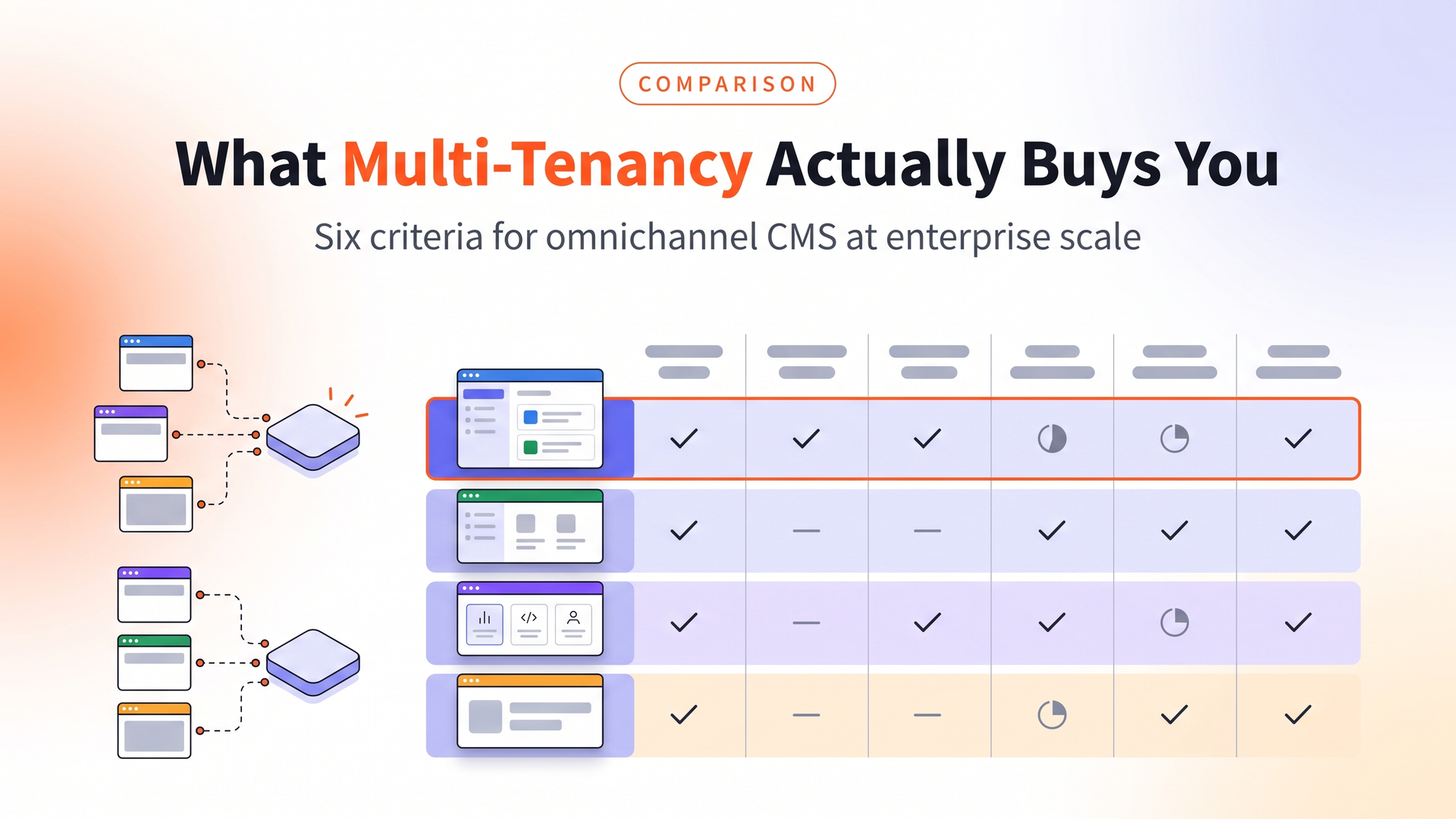
Omnichannel CMS at Enterprise Scale: What Multi-Tenancy Actually Buys You
Most best multi-tenancy CMS lists rank platforms by tenant count. That misses what matters at enterprise scale, how the platform handles hundreds of brands, regions, and sites as tenants. Here are the criteria to evaluate on, and how the leading platforms hold up.
The Buyer's Checklist for an AI-Accelerated CMS: What Actually Matters When Agents Write the Code
A seven-point checklist for evaluating headless CMS platforms once AI coding agents, not just developers, are writing against the schema.
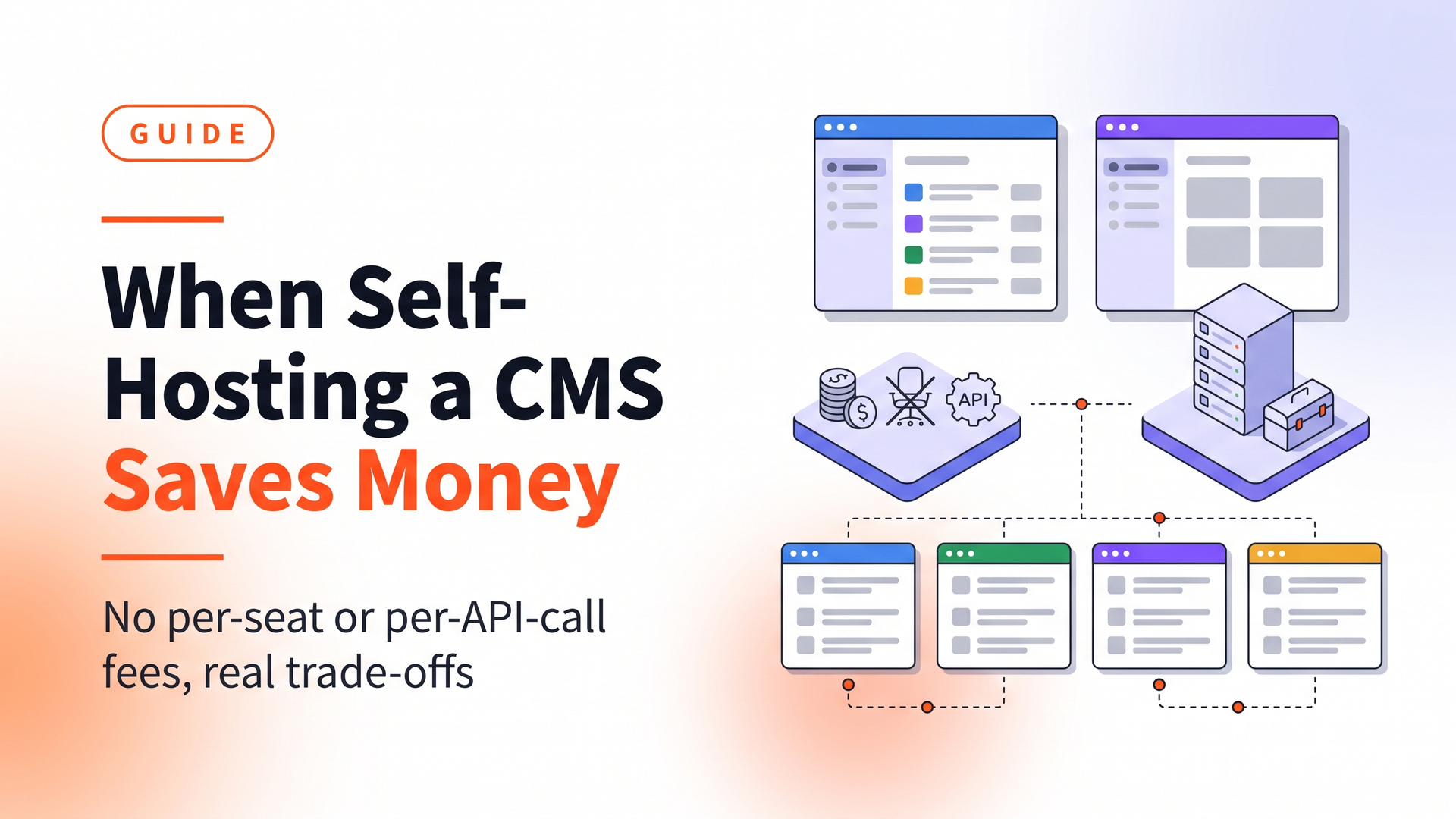
When Self-Hosting a Headless CMS Saves Money (and When It Doesn't)
Compares Strapi, Payload, Directus, and Webiny on infrastructure floor and hidden operational cost to show when self-hosting a headless CMS actually pays off.
The Best Headless CMS Platforms for Developers in 2026
A Headless CMS comparison for Developers in 2026 that actually decide the choice: lock-in, API ceilings, multi-tenancy, pricing, and platform risk.
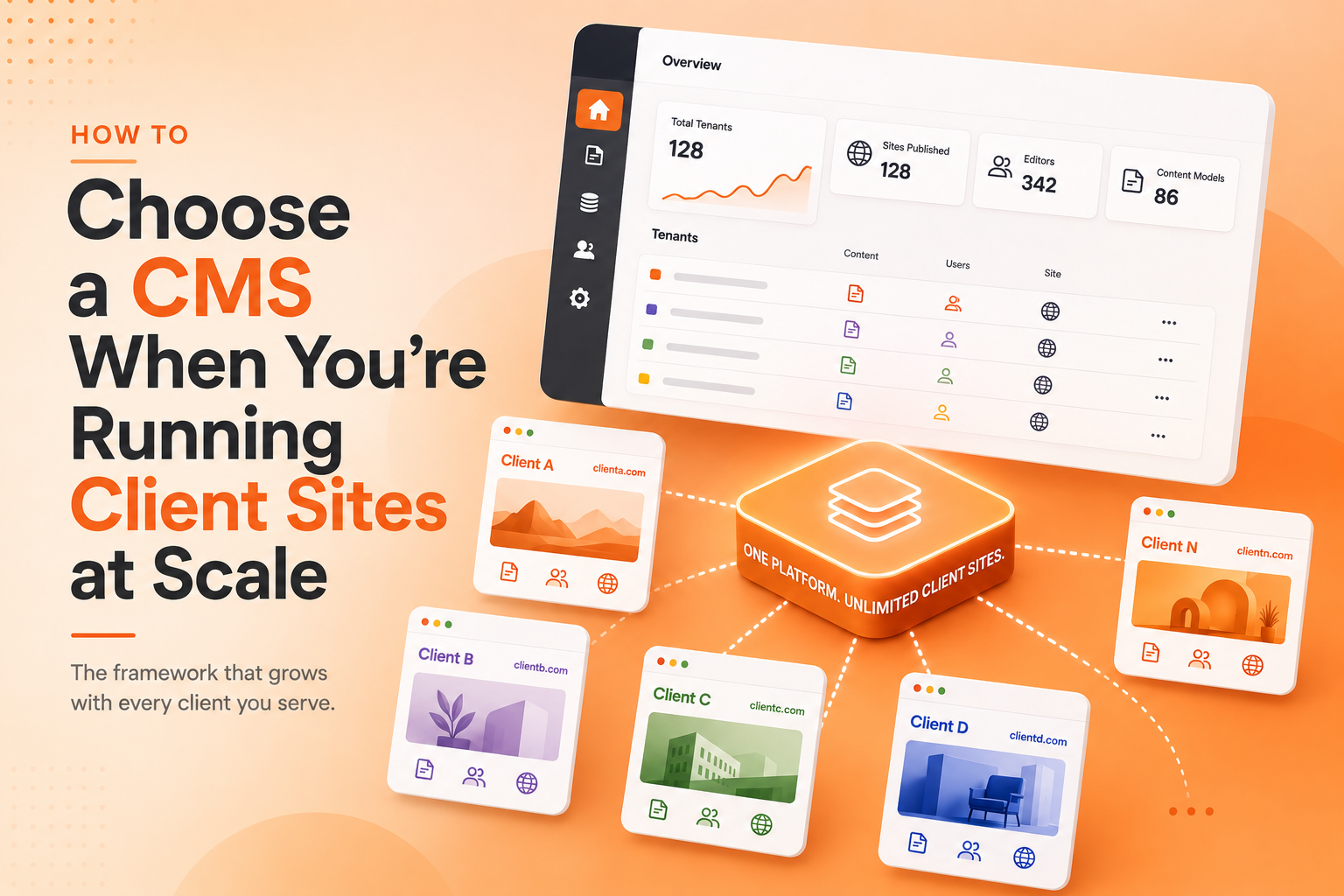
How to Choose a CMS When You're Running Client Sites at Scale
Learn how to choose the best CMS for managing multiple client websites by comparing single-tenant, SaaS, and native multi-tenant architectures based on scalability, isolation, deployment, and long-term cost. Discover which approach works best for agencies as their client portfolio grows, what features actually matter at scale, and why multi-tenancy can dramatically reduce operational overhead while improving profitability.
What Are the Best Alternatives to Payload CMS?
Webiny vs Payload CMS: the strongest Payload alternative for teams that have outgrown a single app. See how Webiny's native multi-tenancy, built-in governance, and AWS-native infrastructure compare to Payload's code-first approach - plus where each platform fits best.
Webiny v6: An AI-Programmable CMS Built for Complexity
The way software gets built is shifting, and the platforms that benefit are the ones with the right technical foundation. Webiny v6 — new project structure, built-in MCP server, Website Builder, SDK, and more — is built for that reality.
How to Set Up Environments: From Playground to Production
How to structure environments to balance agility with stability? At Webiny, we recommend going beyond the classic development–production split by introducing a development playground for experimentation, a staging environment for QA and stakeholder validation, a pre-production environment that mirrors production for final testing, and a robust production environment for live content delivery. Why multiple environments matter for safety, quality, confidence, planning, and collaboration? Ultimately, adopting this simple structure helps teams innovate quickly while keeping the codebase and user experience stable.