Webiny vs Strapi
Strapi helps teams scaffold content APIs fast. It's a great starting point for smaller projects.
Webiny is a programmable content platform built for teams that need enterprise architecture — multi-tenancy, governance, infrastructure control, and AI that doesn't just help editors write, but helps developers build.
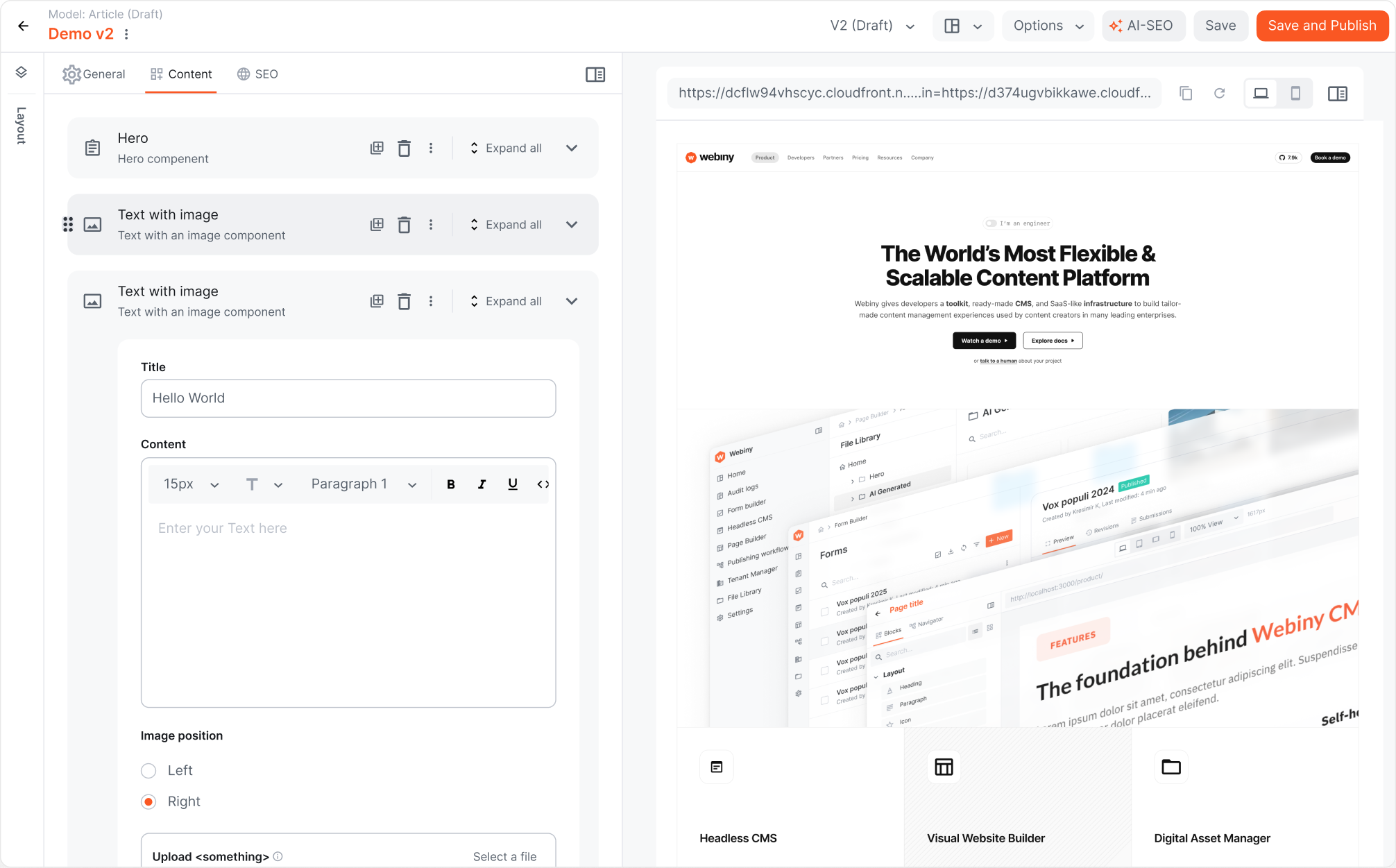
Webiny in 90 Seconds
A content API starter vs a programmable content platform.
Webiny vs Strapi Comparison
Discover the similarities and differences between the two platforms.
Webiny
Strapi
Open-source
Self-hosted
Headless CMS
API
Custom content modeling
Multi-tenancy
Visual page builder
Publishing workflows
MCP Server
Two very different definitions of "developer-first."
Strapi helps developers stand up a content API quickly. Webiny gives developers a programmable foundation they can extend, govern, and scale — with AI that understands the architecture, not just the content.
AI that builds vs AI that writes
Strapi AI generates schemas from prompts, auto-tags media, and translates content. It helps editors work faster inside the admin panel.
Webiny ships an MCP server that gives coding agents — Claude Code, Cursor, Windsurf — full architectural context. They don't manage content. They build features, extensions, and integrations that match the output of a senior Webiny engineer.
.svg)
Multi-tenancy: Built-in vs non-existent
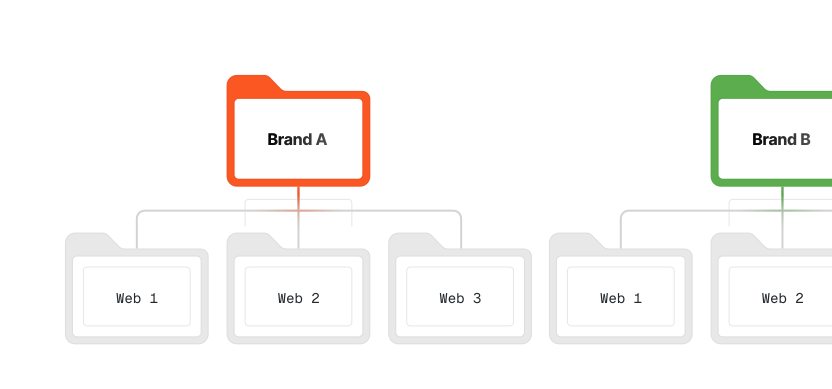
Webiny hosts thousands of isolated tenants from one deployment — separated data, users, assets, and permissions.
Strapi has no multi-tenancy. Multiple brands or regions mean separate instances, each with its own database and deployment. At 10 tenants, that's 10 servers. At 100, it's 100.
Infrastructure: Serverless vs managed Node
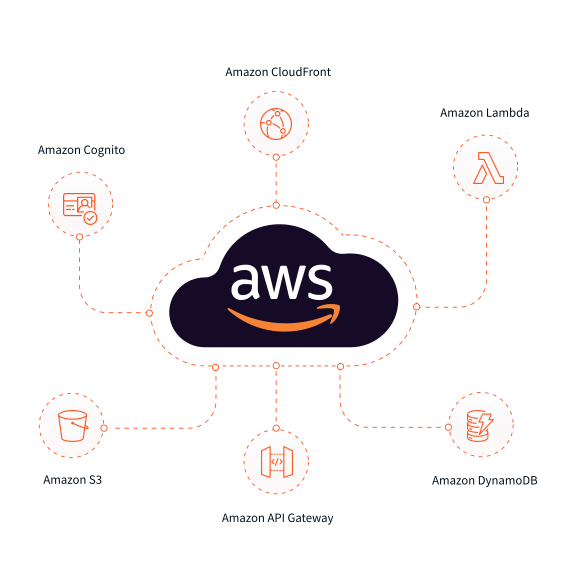
Webiny deploys into your AWS account using serverless infrastructure as code. Scaling and fault tolerance are handled by the platform.
Strapi runs as a Node.js app. You bring the database, configure hosting, and manage scaling. Fine for a small project. A full-time job at enterprise scale.
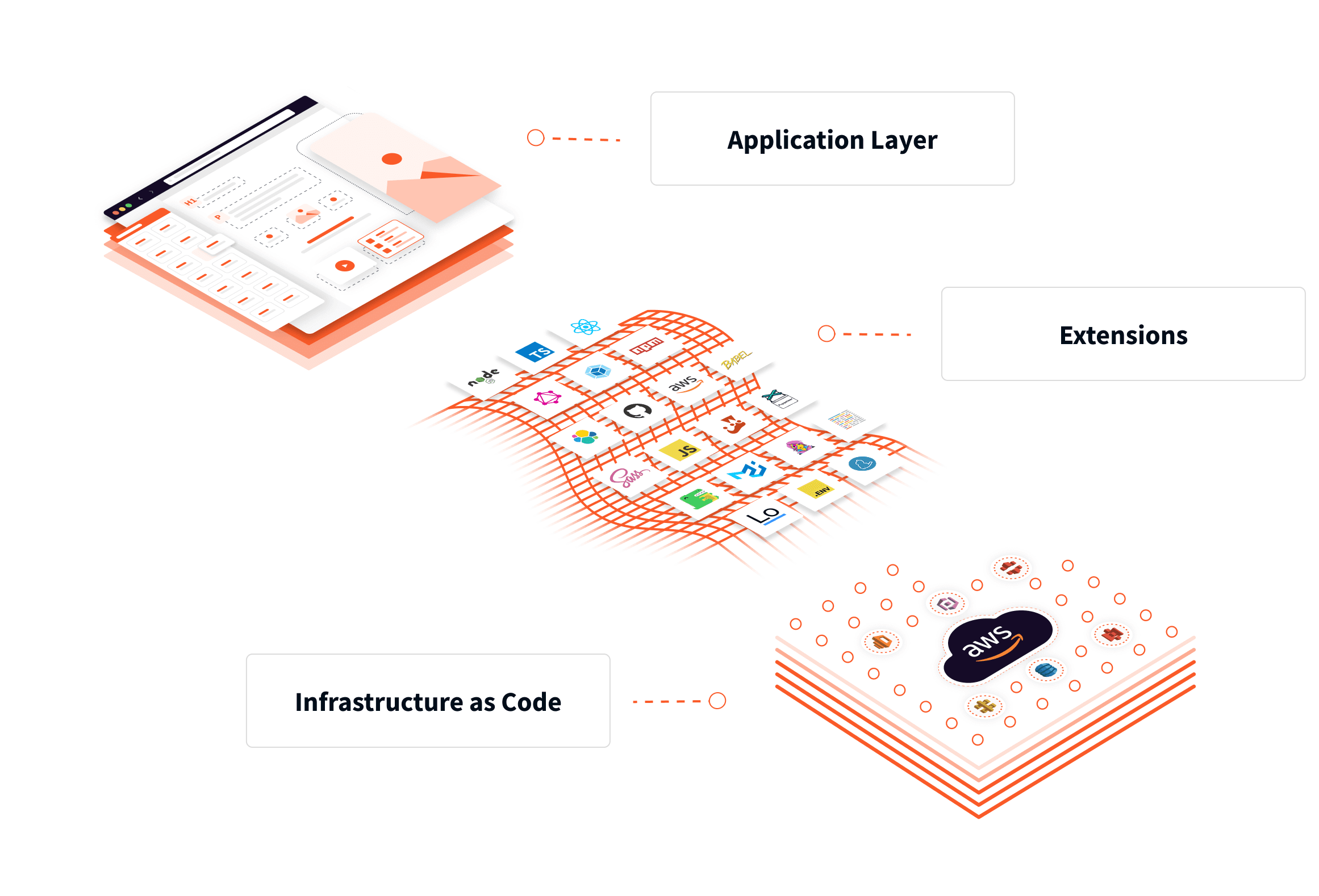
Extensibility: Platform framework vs plugin system
Webiny provides lifecycle hooks, background jobs, CI/CD integration, and a formal extension layer. The strongly typed framework means AI-generated code fits naturally and stays maintainable across upgrades.
Strapi uses a plugin architecture. Flexible for standard cases, but enterprise patterns — background processing, tenant-aware logic, cross-project orchestration — require custom engineering outside the platform.
Schema changes: Hot vs cold
Webiny content models can be created and modified without redeployment.
In Strapi, content type changes require a server restart and redeployment. Schema iteration means a deployment pipeline, not a UI click.
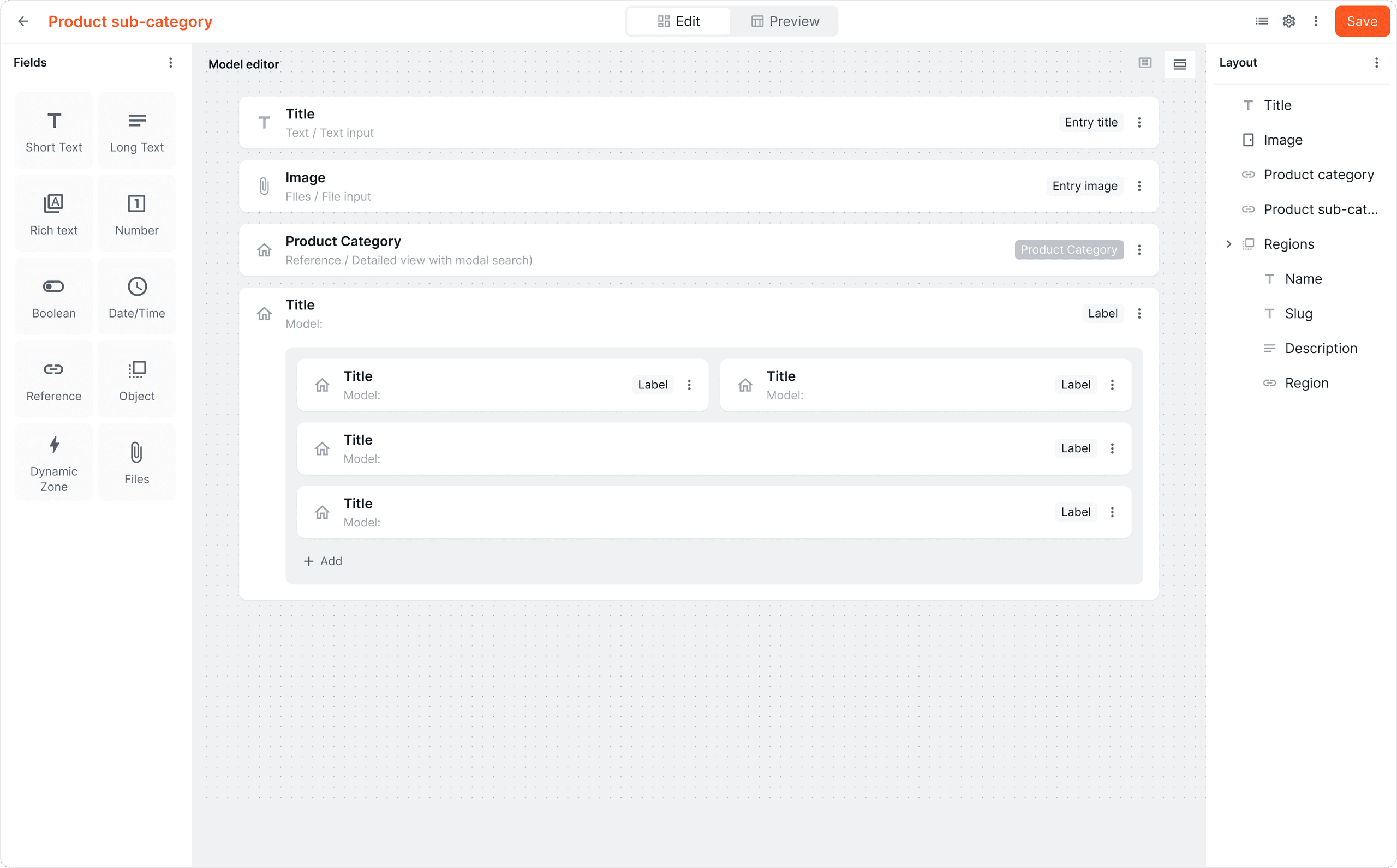
Programmable CMS
Define content models, APIs, workflows, and behavior in code — so your CMS evolves like real software, not a locked product you work around.
Learn moreLifecycle Events & Automation
React to every content change with code — trigger automations, enforce business rules, and connect Webiny to your systems in real time.
Learn moreEmbedded & White-Label CMS
Embed Webiny directly into your application and fully white-label the experience — so your users manage content inside your product, not in a separate CMS.
Learn moreStrapi gets editors started. Webiny keeps them safe at scale.
Strapi's admin panel is intuitive and approachable — especially for smaller teams. But as organizations grow, the gaps in governance, visual tooling, and asset management start to show.
Page building: Visual vs none
Webiny includes a visual website builder with real developer-defined components. Editors compose pages without code.
Strapi has no page builder. Page composition and layout are the frontend team's responsibility. Manageable in small teams — a bottleneck when marketing needs to move independently.
.png%3Foriginal&w=3840&q=75)
Workflows: Multi-step vs draft/publish
Webiny supports multi-step approval flows with defined reviewers, status dashboards, and notifications. Content moves from draft through review to approval with full visibility.
Strapi provides draft and published states. For structured approval chains with multiple reviewers and sign-off stages, teams need to build their own process outside the CMS.

Built for multi-brand and global teams
In Webiny, editors across different brands, regions, or markets each work in their own isolated tenant — with their own content, assets, and permissions. Global content can be defined once and inherited or overridden locally.
In Strapi, there's no concept of tenants. Multi-brand or multi-region setups mean separate instances with separate logins, separate content, and no shared governance.

Asset library vs programmable digital asset manager
Webiny includes a Digital Asset Manager with structured folders, custom metadata, AI tagging, and CDN delivery. Assets are organized, searchable, and governed as part of the content system.
Strapi includes a media library with AI-generated alt text and captions. It works well for standard use cases, but structured folder hierarchies, custom metadata, and asset governance require additional tooling.
.png%3Foriginal&w=3840&q=75)
Versioning & Rollback
Every change is tracked, every version is preserved, and rolling back is instant — so teams can move fast without risking what’s live.
Learn moreData Ownership & Governance
Webiny runs entirely in your cloud — so your content, assets, and metadata never leave your control, are never reused, and are never trained on by third parties.
Learn moreContent Inheritance & Propagation
Define global content once, propagate it safely across tenants, and give local teams the freedom to extend or override — all controlled through code and rules you own.
Learn moreAI that supports, not complicates
Webiny includes AI-powered features like version difference summaries, automatic SEO suggestions, image tagging, and persona-based content generation — directly inside the editorial flow. All model-agnostic, all running inside your cloud.
Learn moreStrapi is a great content API. Webiny is content infrastructure.
Strapi is a solid, popular headless CMS — and for smaller teams building standalone projects, it's a fast, familiar starting point. Its admin panel is approachable, the plugin ecosystem is active, and the AI features help editors move faster.
But Strapi wasn't built for the problems that emerge at enterprise scale: multi-tenancy, governance, serverless infrastructure, white-label embedding, and AI that helps developers extend the platform itself — not just generate schemas.
Webiny was.
If you're building a content API for a single project, Strapi will get you there quickly.
If you're building content infrastructure that scales with your organization, Webiny is the foundation.