Webiny vs Sanity
Both are developer-friendly and API-first.
But if infrastructure control, multi-tenancy, extensibility, and long-term architectural freedom matter — the difference is fundamental.
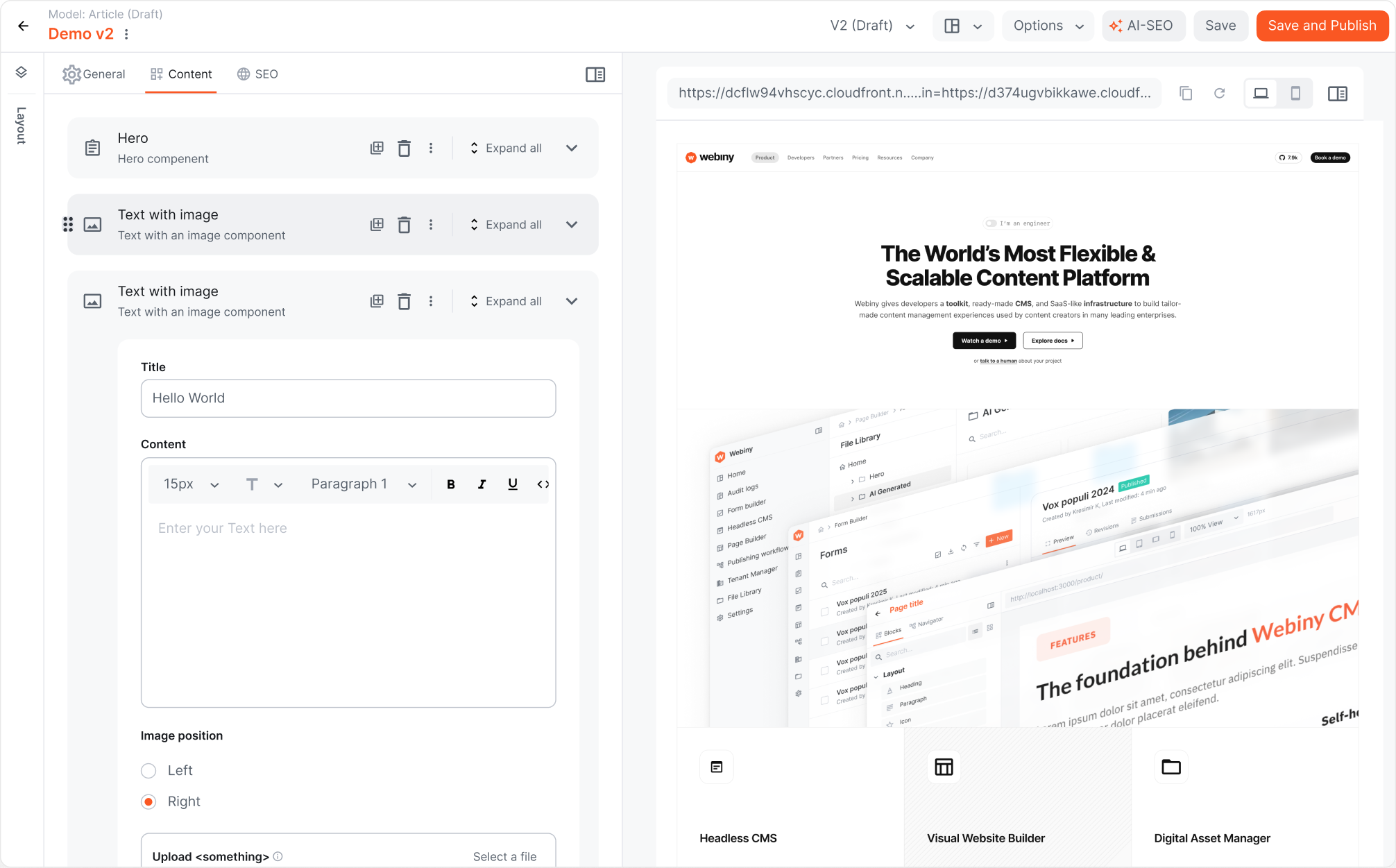
Webiny in 90 Seconds
When content becomes core infrastructure, SaaS isn’t always enough.
Webiny vs Sanity Comparison
Discover the similarities and differences between the two platforms.
Webiny
Sanity
Headless CMS capabilities
Custom content modeling
Live preview support
Built-in Digital Asset Manager
Multi-step publishing workflows
Audit logs & governance controls
Lifecycle hooks
Vendor lock-in risk
Open-source core
Multi-tenant architecture
Drag& Drop visual page editing
Infrastructure ownership
Webiny vs Sanity: Cost comparison
Estimate the cost of Webiny's license and hosting, and compare it to Sanity's pricing for different project sizes.
For a more detailed comparison including other competitors, check out the full cost calculator.
Webiny vs Sanity
Webiny cost = Business license + estimated AWS hosting. Sanity uses published SaaS pricing.
Pricing sourceLast verified: 2026-03-06. Sanity Growth plan is $15/seat/mo (monthly only) and includes 2 datasets (projects). Running more projects requires multiple plans. We assume all users need access to all projects, so full seat counts are applied to each plan.
Full architectural control — not just schema flexibility
Sanity gives you a customizable Studio.
Webiny gives you a programmable content platform deployed inside your own cloud — with lifecycle hooks, multi-tenancy, and infrastructure you control.
Infrastructure ownership vs hosted backend
Sanity runs as a hosted SaaS platform. You configure the Studio, but the backend, storage, and scaling live in their cloud.
Webiny deploys directly into your AWS account. The APIs, storage, and serverless scaling model are part of your infrastructure. You keep architectural control while still getting a production-ready foundation.

Webhooks vs lifecycle-level extensibility
Sanity allows integrations primarily through webhooks and custom Studio logic.
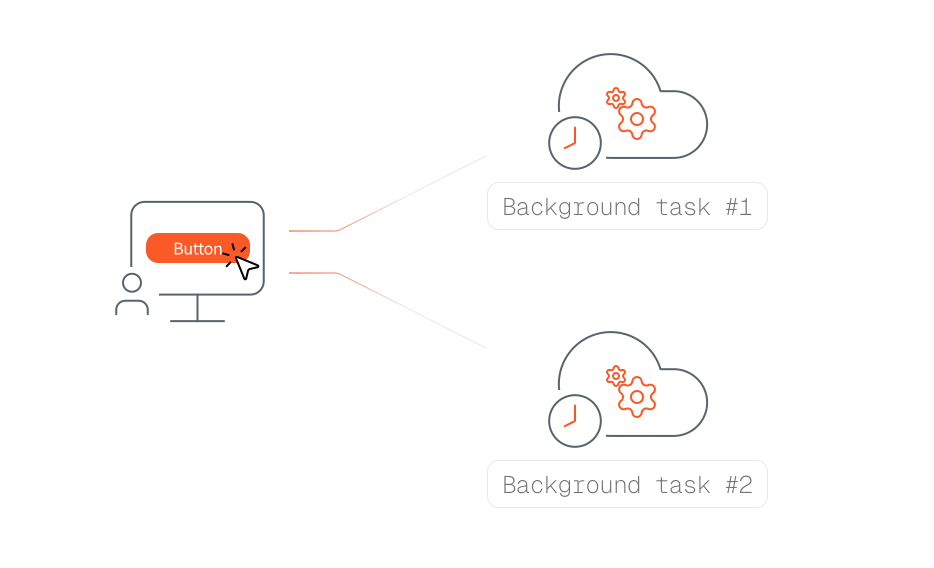
Webiny exposes before and after lifecycle events on every content operation. You can enforce business rules, manipulate data, trigger background jobs, or propagate changes across tenants — all inside your codebase and CI/CD pipeline.
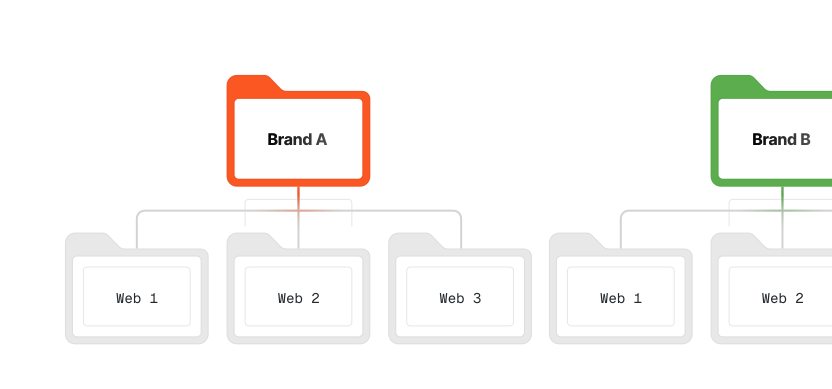
Separate projects vs native multi-tenancy
In Sanity, projects are typically isolated environments managed separately.
In Webiny, one backend can securely host thousands of isolated tenants, each with its own content, users, permissions, and assets. This makes Webiny naturally suited for SaaS platforms, multi-brand enterprises, and white-label systems.
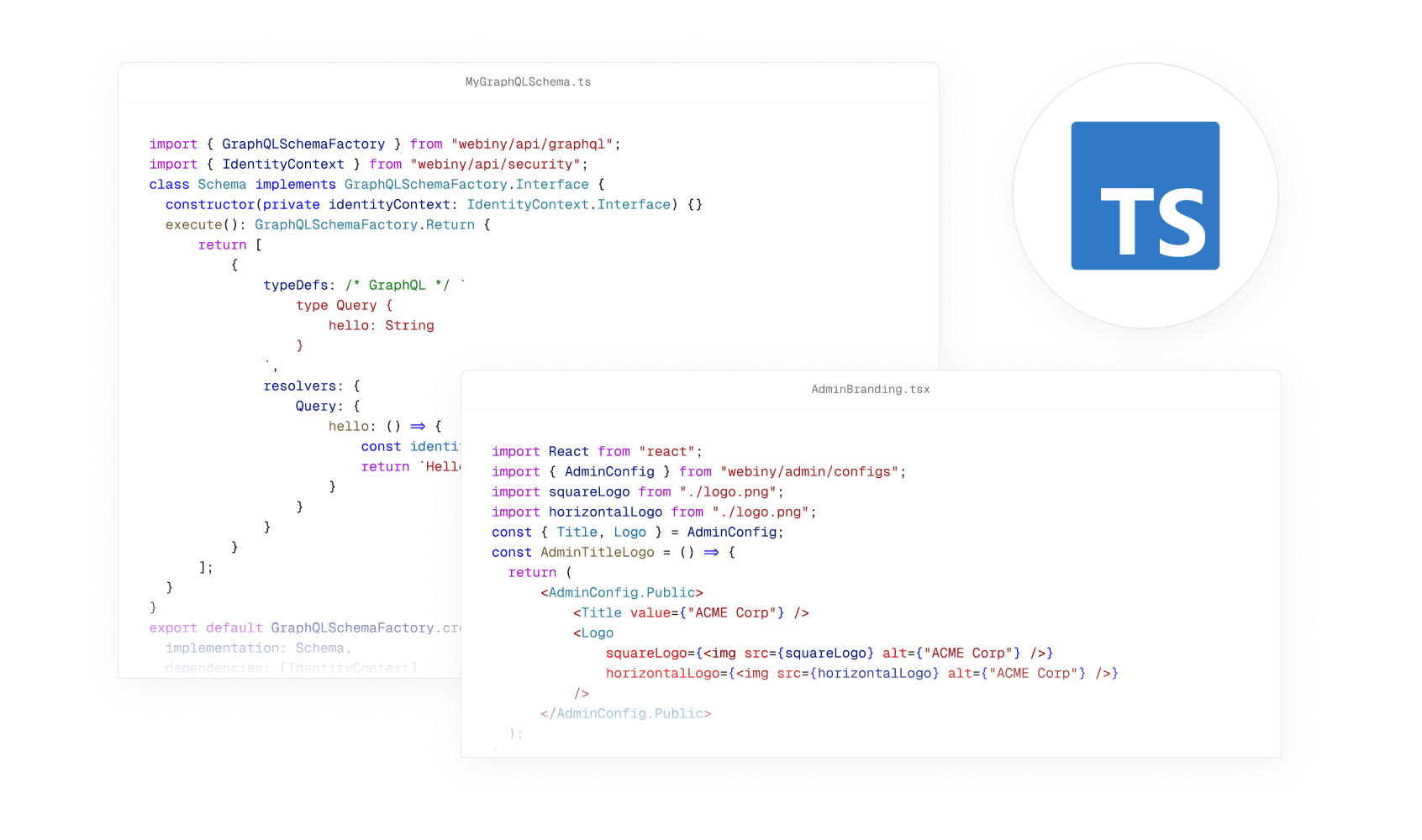
Customizable Studio vs open platform core
Sanity offers a highly customizable Studio, but the backend remains proprietary.
Webiny’s core is open-source and runs inside your cloud. You can inspect it, extend it, and evolve it as part of your own product — without depending on a closed backend layer.
CMS only vs composable content platform
Sanity focuses primarily on structured content management and editorial flexibility.
Webiny includes a full composable stack — Headless CMS, Visual Website Builder, Digital Asset Manager, Publishing Workflows, and Multi-Tenancy — all running on the same extensible foundation. Developers don’t need to stitch together multiple tools or vendors to build a complete content system.
Proprietary backend vs open, inspectable core
With Sanity, the Studio is customizable, but the backend, storage engine, and core infrastructure remain proprietary and vendor-hosted.
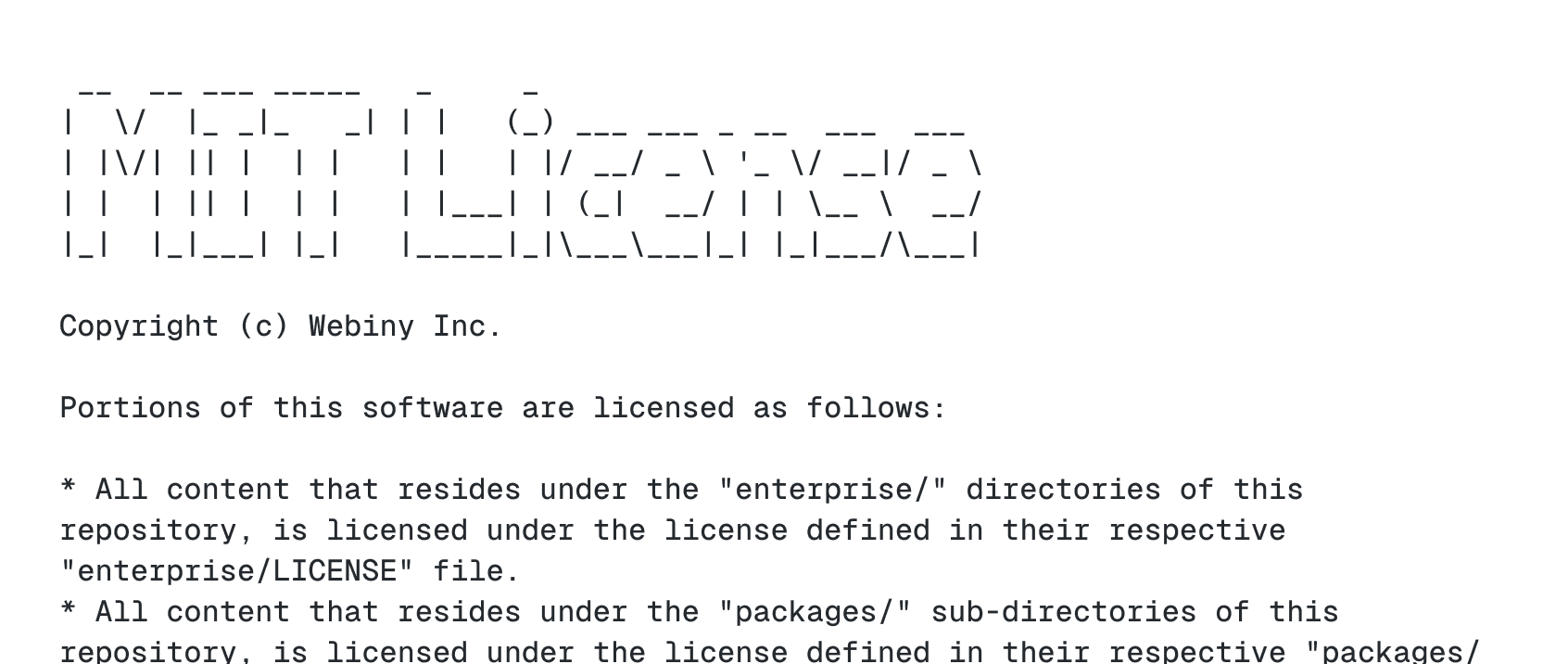
With Webiny, the entire core is open-source and deployed inside your cloud. You can inspect the code, extend internal behavior, and evolve the platform alongside your product. There’s no closed backend layer you depend on — and no architectural dead end as your requirements grow.
Programmable CMS
Define content models, APIs, workflows, and behavior in code — so your CMS evolves like real software, not a locked product you work around.
Learn moreLifecycle Events & Automation
React to every content change with code — trigger automations, enforce business rules, and connect Webiny to your systems in real time.
Learn moreEmbedded & White-Label CMS
Embed Webiny directly into your application and fully white-label the experience — so your users manage content inside your product, not in a separate CMS.
Learn moreStructured freedom — without losing control
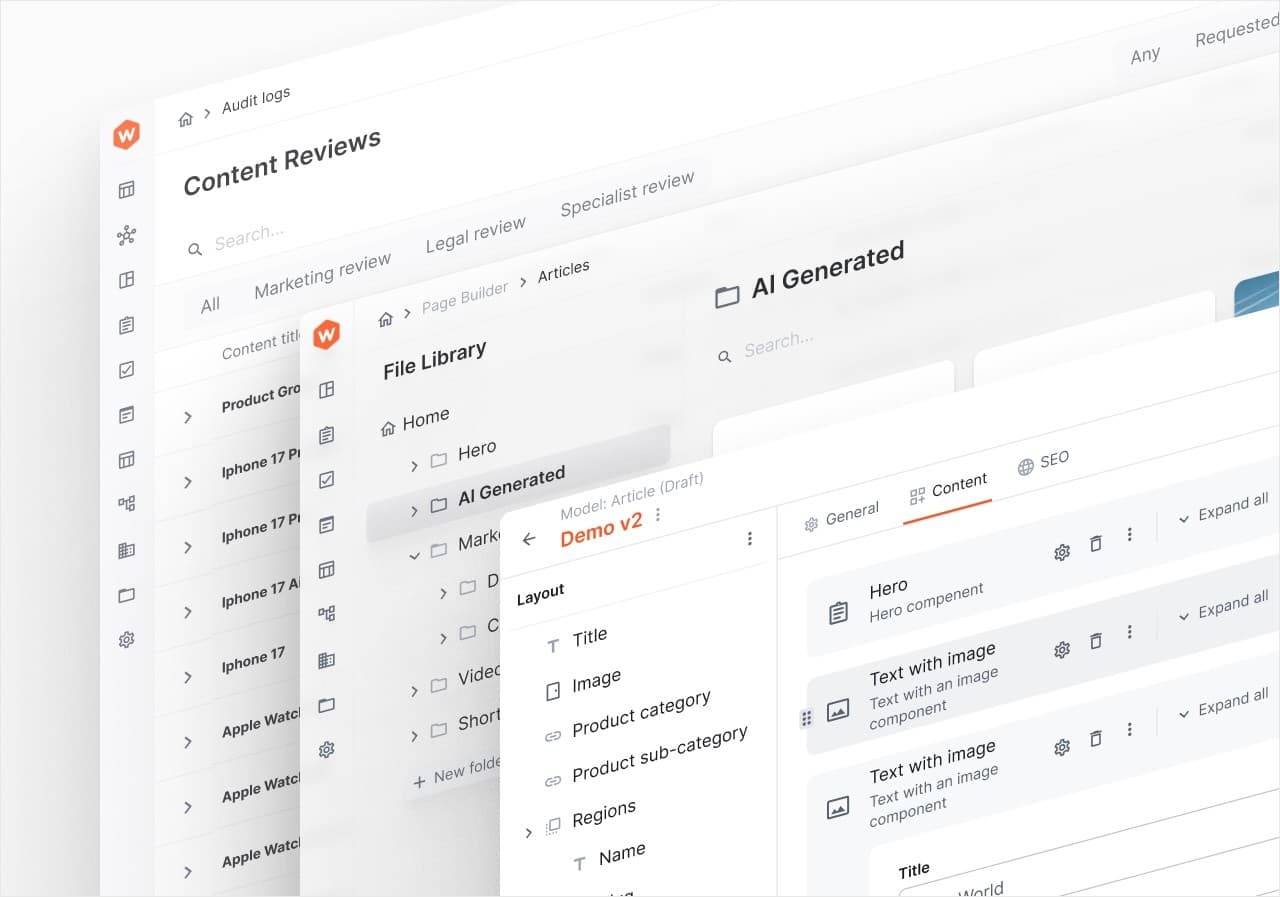
Sanity offers a flexible editing studio. Webiny combines flexibility with built-in workflows, governance, and visual page building — so editors move fast without sacrificing oversight.
Flexible studio vs guided editorial experience
Sanity gives teams a highly customizable editing studio. Editors can work with structured content, but much of the experience depends on how developers configure it.
Webiny provides a structured, enterprise-ready editorial UI out of the box — with versioning, approvals, audit logs, and localization built in. Editors don’t depend on custom implementations to work safely and efficiently.
.png%3Foriginal&w=3840&q=75)
Structured content editing vs true visual page building
With Sanity, editors manage structured content and rely on frontend preview setups to understand how it renders.
With Webiny, editors can visually compose pages using a drag-and-drop builder powered by real components. They see how content looks while building it — without needing developer intervention for every layout change.

Basic publish states vs controlled approval flows
Sanity supports draft and published states, and workflows can be implemented with customization.
Webiny includes native multi-step publishing workflows with defined reviewers, visibility into content status, scheduled releases, and notifications. Governance is part of the system — not an add-on.

Asset library vs programmable digital asset manager
Sanity includes built-in asset management for images and files stored in their cloud.
Webiny provides a self-hosted Digital Asset Manager with folder-level permissions, custom metadata, lifecycle automation, and multi-tenant isolation. Assets are organized, governed, and fully under your control.

Editor customization vs enterprise traceability
Sanity allows developers to tailor the Studio experience.
Webiny ensures every action is versioned, logged, and recoverable by default. Editors can compare versions, restore previous states, and operate in an environment designed for accountability — especially important in regulated or multi-team environments.

Versioning & Rollback
Every change is tracked, every version is preserved, and rolling back is instant — so teams can move fast without risking what’s live.
Learn moreData Ownership & Governance
Webiny runs entirely in your cloud — so your content, assets, and metadata never leave your control, are never reused, and are never trained on by third parties.
Learn moreContent Inheritance & Propagation
Define global content once, propagate it safely across tenants, and give local teams the freedom to extend or override — all controlled through code and rules you own.
Learn moreAI that supports, not complicates
Webiny includes AI-powered features like version difference summaries, automatic SEO suggestions, image tagging, and persona-based content generation — directly inside the editorial flow. AEM integrates AI through Adobe Sensei, but advanced capabilities often tie into broader Adobe products and ecosystem tooling.
Learn moreWhen content becomes infrastructure
Sanity is an excellent content SaaS with a highly customizable editing experience.
Webiny is a self-hosted, multi-tenant content platform designed to become part of your architecture — not sit beside it.
If you need flexible content modeling, Sanity is a strong choice.
If you need infrastructure control, governance, and extensibility at platform level, Webiny goes further.