Webiny vs Payload
Two modern, TypeScript CMS platforms. Two very different ambitions.
Payload is a clean, code-first CMS that lives inside your Node stack.
Webiny is a composable, multi-tenant content platform built to run at enterprise scale inside your own AWS cloud.
.png)
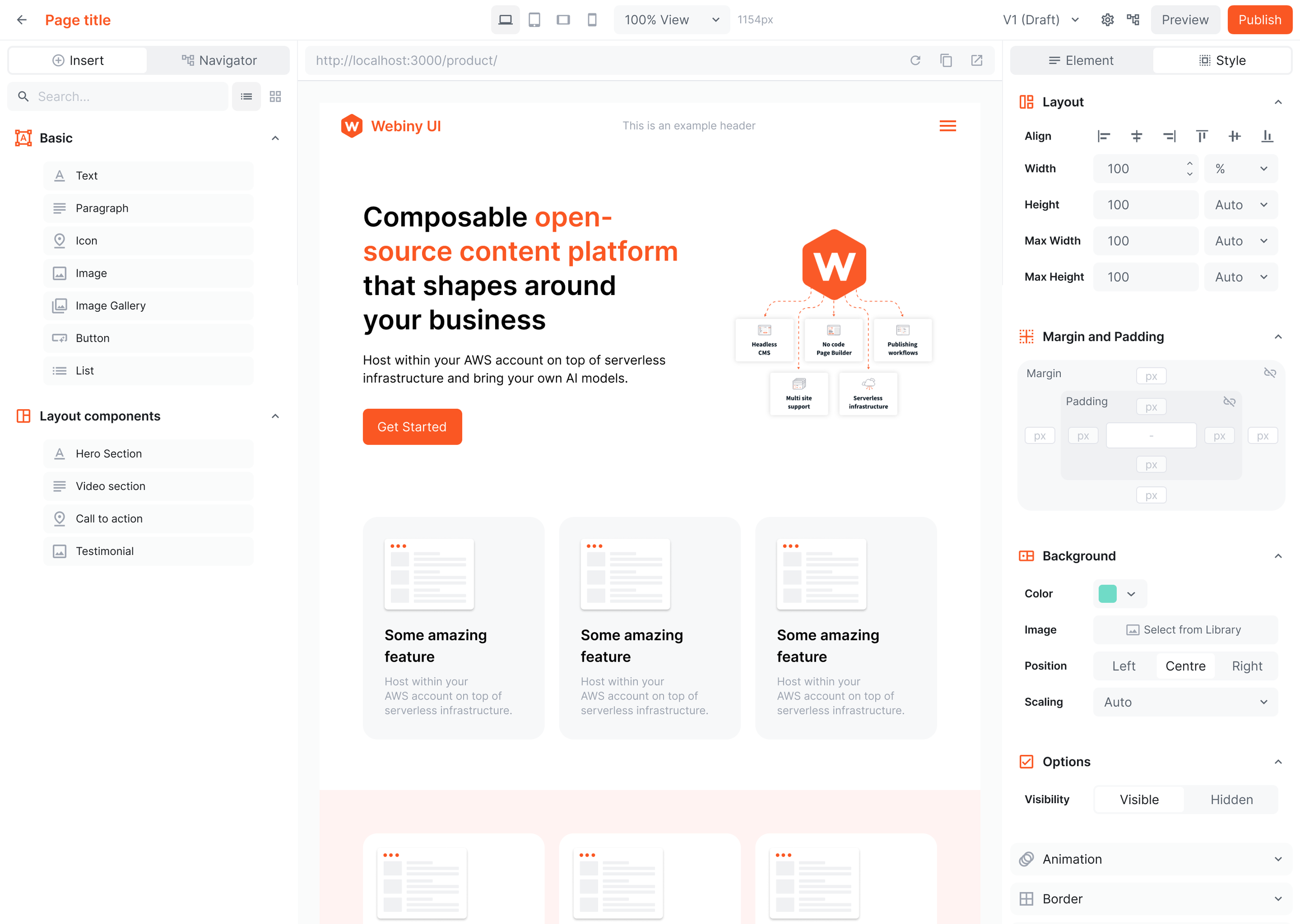
Webiny in 90 seconds
Built for scale, governance, and multi-project ecosystems — not just for code-first projects.
Webiny vs Payload Comparison
Discover the similarities and differences between the two platforms.
Webiny
Payload
Open-source
TypeScript-first
Self-hosted
API
Visual page builder
Publishing Workflows
Governance & audit logs
Infrastructure as Code
Multi-tenancy
Enterprise SSO
Built for distributed systems — not just application backends.
Architect for scale, isolation, and long-term control — not just content models.
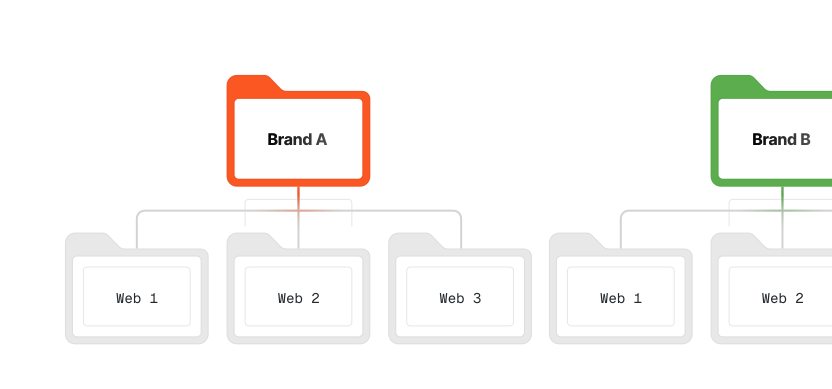
Multi-tenancy: Native vs modeled
In Webiny, one deployment can securely host thousands of isolated tenants with separated data, users, assets, and permissions.
In Payload, multi-tenancy is something you model manually or solve with separate deployments.
If you are building SaaS or multi-brand ecosystems, Webiny solves it at the foundation.
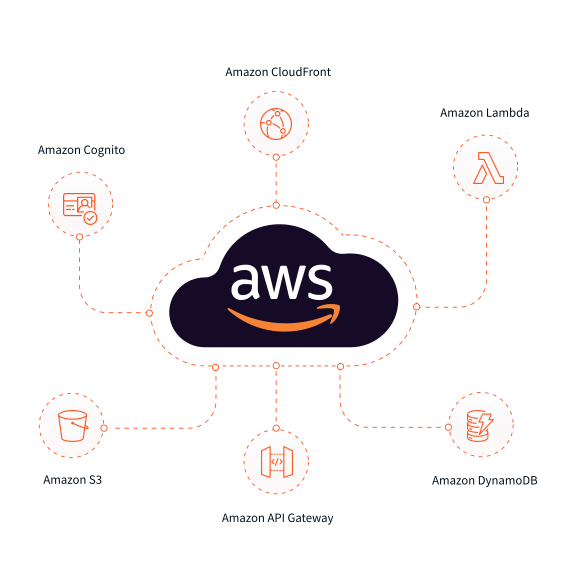
Infrastructure: Serverless vs managed Node
Webiny deploys into your AWS account using serverless infrastructure defined as code. Scaling, fault tolerance, and resource management are handled by the platform architecture.
Payload runs as a Node application. You decide how to scale it, where to host it, and how to maintain it.
Webiny removes operational friction without taking away ownership.
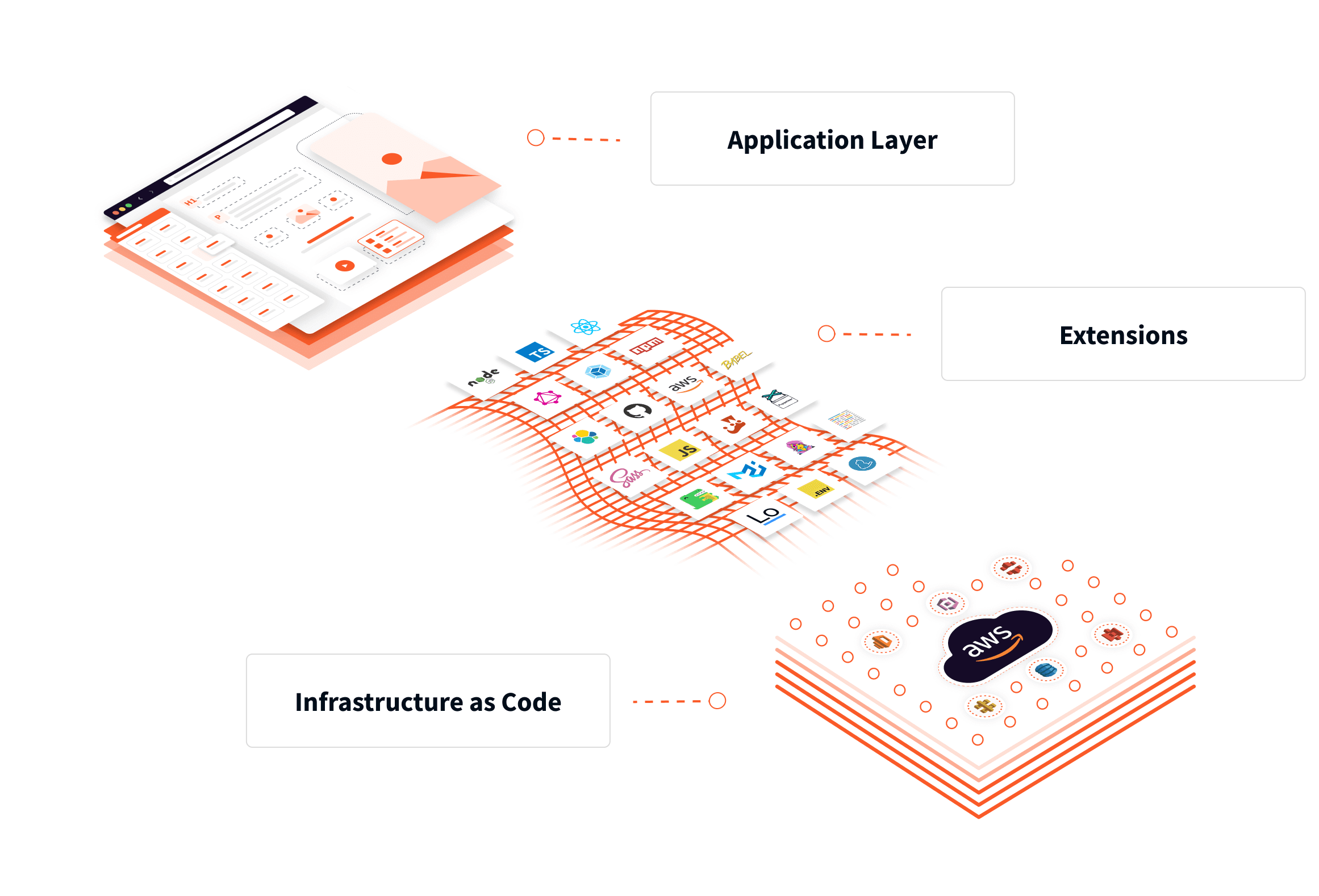
Extensibility: Structured vs DIY
Webiny provides lifecycle hooks, background jobs, CI/CD integration, and a formal extension layer as part of the core system.
Payload allows deep customization, but enterprise patterns are implemented manually inside your codebase.
With Webiny, extensibility is part of the architecture. With Payload, extensibility is code you maintain.
Governance: Included vs engineered
Webiny includes audit logs, version comparison, approval workflows, and scheduled publishing out of the box.
Payload provides drafts and access control, but complex governance models require custom work.
If compliance, traceability, and structured publishing matter, Webiny reduces engineering effort significantly.
.png&w=3840&q=75)
Programmable CMS
Define content models, APIs, workflows, and behavior in code — so your CMS evolves like real software, not a locked product you work around.
Learn moreLifecycle Events & Automation
React to every content change with code — trigger automations, enforce business rules, and connect Webiny to your systems in real time.
Learn moreEmbedded & White-Label CMS
Embed Webiny directly into your application and fully white-label the experience — so your users manage content inside your product, not in a separate CMS.
Learn moreStructured collaboration — not developer-dependent processes.
Move faster with structure, workflows, and tools built for real collaboration.
Page building: Visual vs custom rendering
Webiny includes a visual website builder that works with real components defined by developers. Editors can compose pages without touching code.
Payload does not include a page builder. Page composition and rendering are fully custom.
In Webiny, marketing moves without blocking engineering.
.png%3Foriginal&w=3840&q=75)
Workflows: Built-in vs bespoke
Webiny allows multi-step approval flows with dashboards and notifications.
In Payload, review flows must be implemented manually.
For larger teams, that difference becomes operational.

Versioning: Human-readable vs technical
Webiny provides clear, human-readable comparisons between content versions.
Payload tracks versions but comparison tooling is more technical.
Editors reviewing critical changes benefit from a UX designed for them, not just developers.

DAM: Platform vs upload field
Webiny includes a full Digital Asset Manager with folders, permissions, AI tagging, CDN delivery, and multi-tenant isolation — built into the platform.
In Payload, media is typically handled as an upload-enabled collection. It works, but governance, automation, and large-scale organization require additional engineering.

Versioning & Rollback
Every change is tracked, every version is preserved, and rolling back is instant — so teams can move fast without risking what’s live.
Learn moreData Ownership & Governance
Webiny runs entirely in your cloud — so your content, assets, and metadata never leave your control, are never reused, and are never trained on by third parties.
Learn moreContent Inheritance & Propagation
Define global content once, propagate it safely across tenants, and give local teams the freedom to extend or override — all controlled through code and rules you own.
Learn moreAI that supports, not complicates
Webiny includes AI-powered features like version difference summaries, automatic SEO suggestions, image tagging, and persona-based content generation — directly inside the editorial flow. AEM integrates AI through Adobe Sensei, but advanced capabilities often tie into broader Adobe products and ecosystem tooling.
Learn moreBuilt for projects — or built for platforms?
Payload is a powerful, clean CMS framework for developers who want maximum control inside their application.
Webiny is a scalable content platform designed for teams running multi-project, multi-tenant, enterprise-grade systems inside their own cloud.
If you are building a feature, Payload is strong.
If you are building infrastructure, Webiny is stronger.