Webiny vs Drupal
Drupal defined open-source content management for the monolithic era.
Webiny defines it for the serverless era.
Both give you ownership.
Only one is built for modern cloud-native systems.
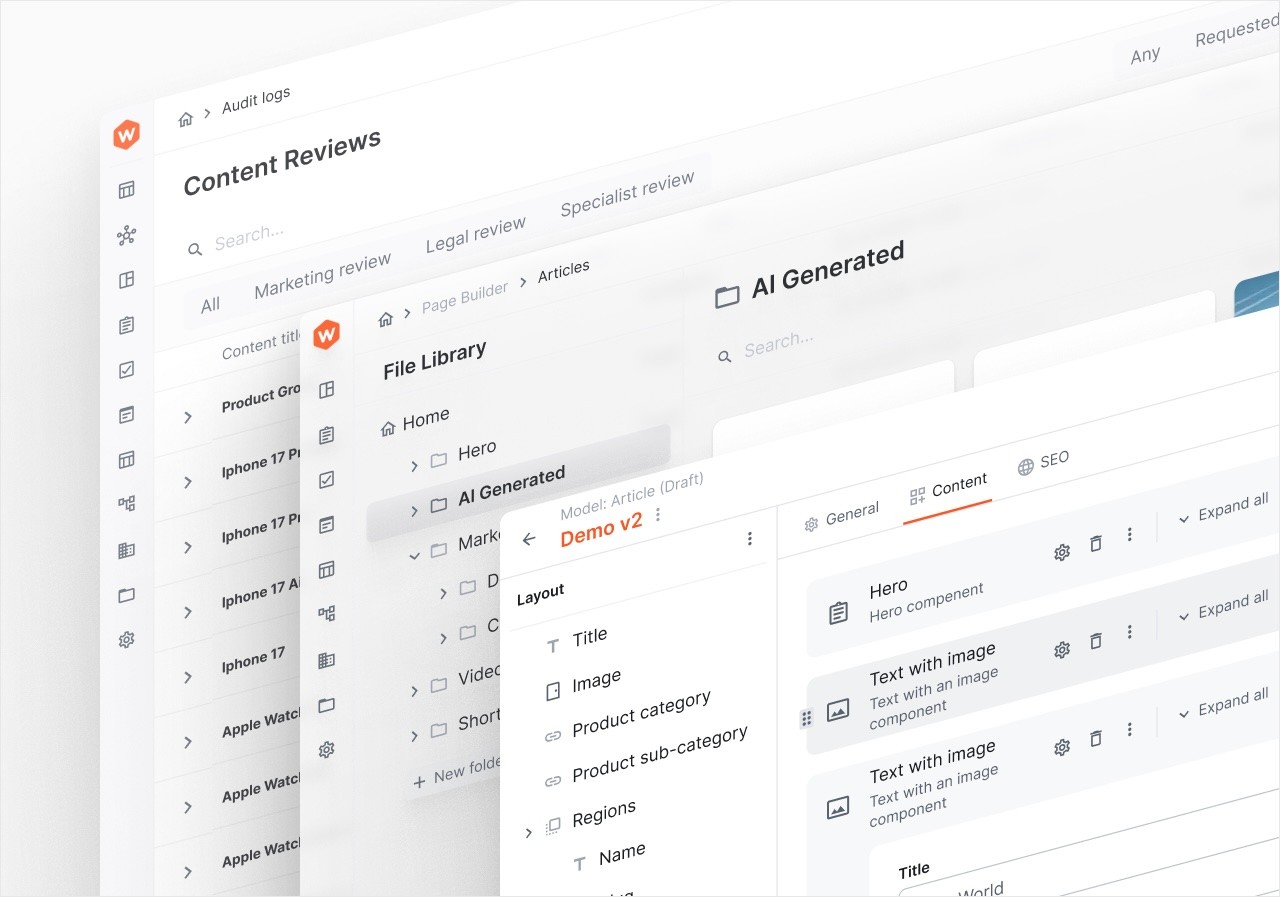
Webiny in 90 Seconds
Open-source CMS. Two very different generations.
Webiny vs Drupal Comparison
Discover the similarities and differences between the two platforms.
Webiny
Drupal
Open-source
Custom content modeling
Self-hosted
Headless API
Architecture
Visual page builder
Publishing workflows
Digital Asset Manager
Extensibility model
DevOps overhead
Multi-tenancy
Infrastructure-as-Code
Webiny vs Drupal (Acquia): Cost comparison
Estimate the cost of Webiny's license and hosting, and compare it to Drupal (Acquia)'s pricing for different project sizes.
For a more detailed comparison including other competitors, check out the full cost calculator.
Webiny vs Drupal (Acquia)
Webiny cost = Business license + estimated AWS hosting. Drupal (Acquia) uses estimated SaaS pricing.
Pricing sourceLast verified: 2026-03-06. Compared against Acquia Cloud Platform, the leading managed Drupal hosting. Drupal CMS itself is open-source.
Built for modern engineering teams — not 2010 infrastructure
Modern architecture, clean extensibility, and cloud-native foundations — without the legacy baggage.
Architecture
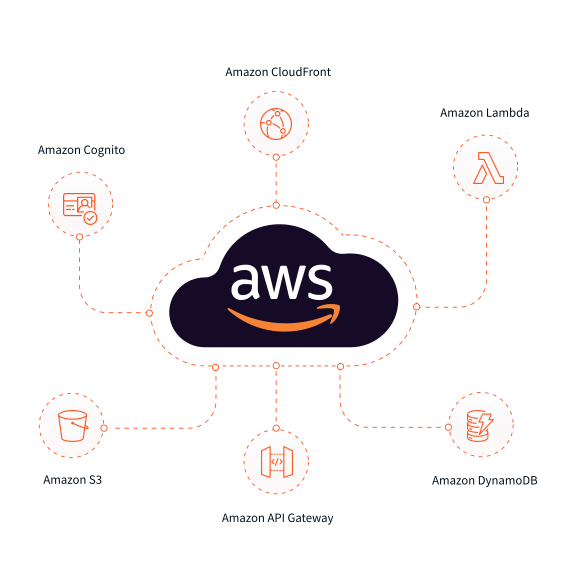
Drupal runs on a traditional PHP stack that requires managed servers, caching layers, upgrades, and ongoing patching.
Webiny runs serverless inside your AWS account. No servers. No scaling configuration. No infrastructure babysitting.
Modern cloud-native vs legacy server-managed.
Extensibility
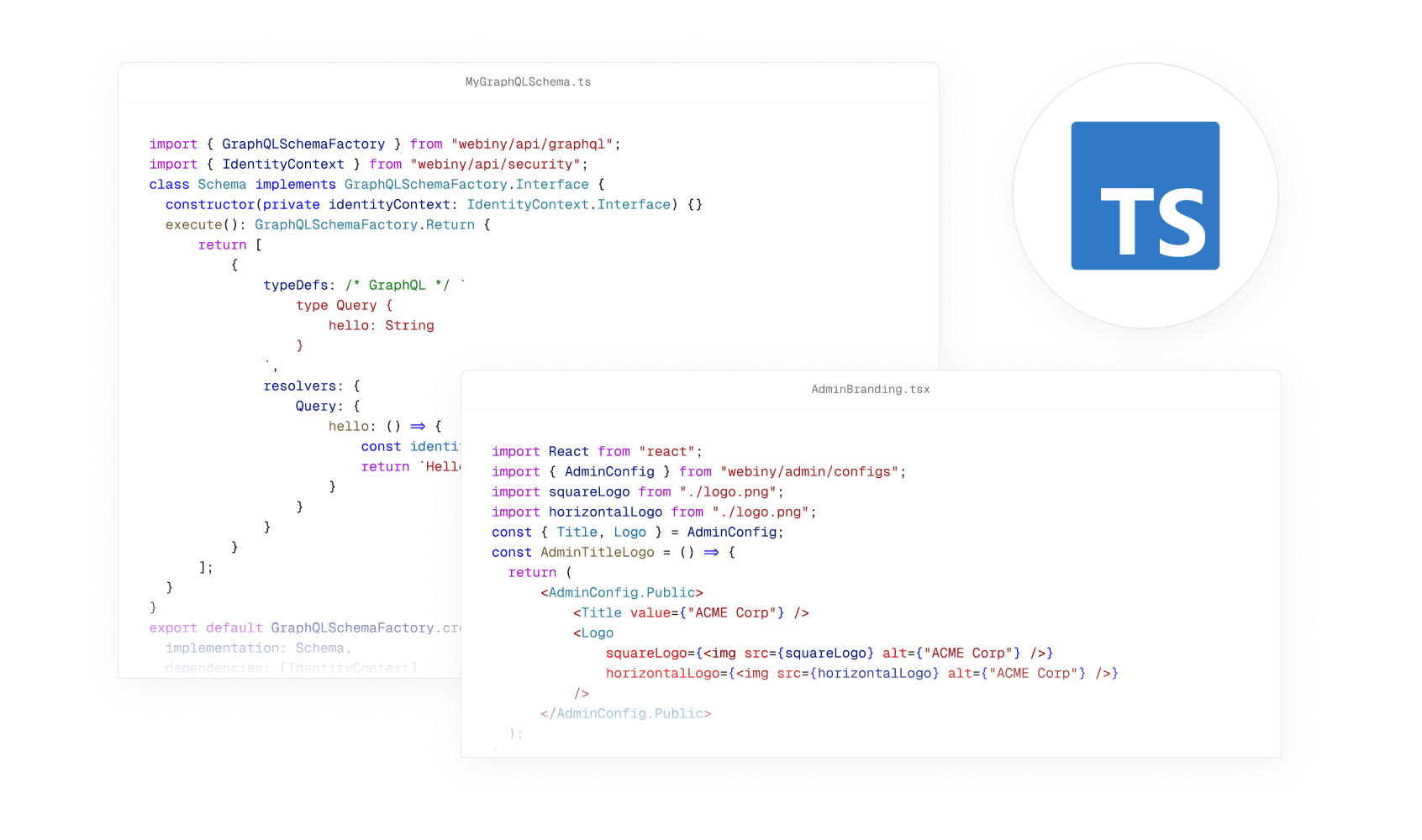
Drupal extensibility relies on modules and PHP customizations that must be maintained across upgrades.
Webiny extensibility is framework-native. You extend APIs, hook into lifecycle events, and add functionality directly in TypeScript inside your codebase.
Module-driven vs code-native.
Multi-tenancy
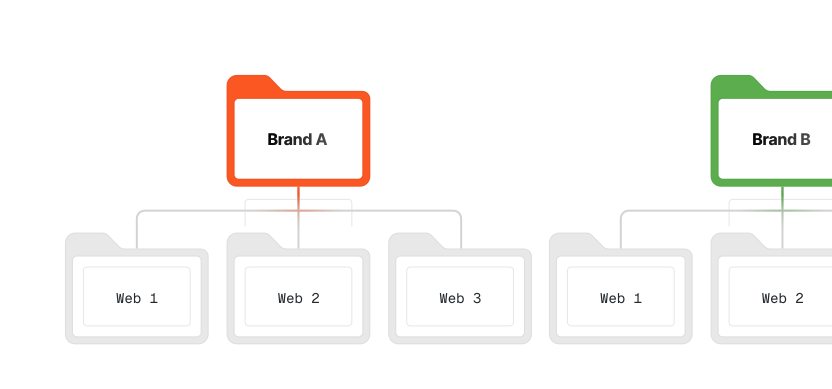
Drupal multisite setups require complex configuration or separate installations.
Webiny includes true tenant isolation out of the box. Data, users, and assets are separated while infrastructure stays shared.
Workaround vs architecture.
API-first by design
Drupal was originally built as a page-rendering CMS. APIs were added later.
Webiny is GraphQL-first. Every content model, extension, and lifecycle event is exposed through a consistent API layer from day one.
Retrofitted API vs API-native architecture.
.svg)
Frontend Separation
Drupal traditionally couples backend and rendering, even in decoupled setups.
Webiny is fully frontend-agnostic. Use Next.js, Vue, mobile apps, or multiple frontends without architectural compromise.
Decoupled as an option vs decoupled by design.
.svg)
Upgrade Model
Major Drupal upgrades often require module compatibility checks and refactoring.
Webiny extensions live inside your codebase. No third-party dependency chain. No module compatibility roulette.
Module ecosystem risk vs controlled extensibility.
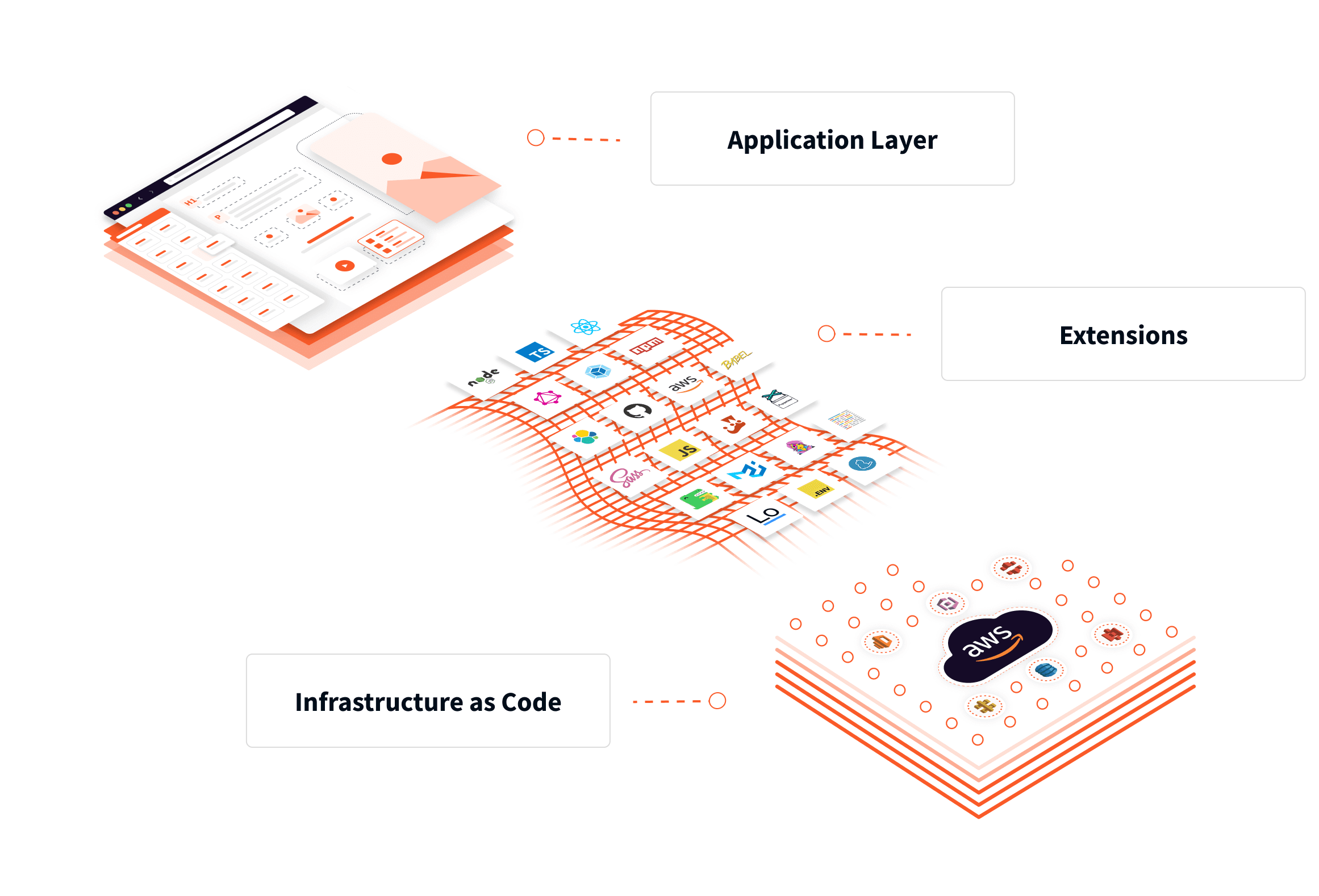
Programmable CMS
Define content models, APIs, workflows, and behavior in code — so your CMS evolves like real software, not a locked product you work around.
Learn moreLifecycle Events & Automation
React to every content change with code — trigger automations, enforce business rules, and connect Webiny to your systems in real time.
Learn moreEmbedded & White-Label CMS
Embed Webiny directly into your application and fully white-label the experience — so your users manage content inside your product, not in a separate CMS.
Learn moreFamiliar CMS editing — with modern clarity
Drupal offers a mature editorial experience.
But in large installations, complexity grows quickly.
Webiny focuses on clean structure and predictable workflows.
Publishing workflows
In Drupal, advanced workflows often rely on contributed modules and custom configuration.
In Webiny, publishing workflows are built into the platform. Approvals, scheduling, versioning, and audit logs work consistently out of the box.
Configured vs integrated.

Asset management
Drupal provides a media library that can be extended through modules.
Webiny includes a full digital asset manager with folder-level permissions, custom metadata, lifecycle automation, and global CDN delivery.
Basic media handling vs enterprise DAM.

Visual editing
Drupal can support page builders through additional modules.
Webiny includes a visual Website Builder that integrates directly with your frontend components and your design system.
Add-on builder vs integrated builder.
.png%3Foriginal&w=3840&q=75)
Versioning & Rollback
Every change is tracked, every version is preserved, and rolling back is instant — so teams can move fast without risking what’s live.
Learn moreData Ownership & Governance
Webiny runs entirely in your cloud — so your content, assets, and metadata never leave your control, are never reused, and are never trained on by third parties.
Learn moreContent Inheritance & Propagation
Define global content once, propagate it safely across tenants, and give local teams the freedom to extend or override — all controlled through code and rules you own.
Learn moreAI that supports, not complicates
Webiny includes AI-powered features like version difference summaries, automatic SEO suggestions, image tagging, and persona-based content generation — directly inside the editorial flow. AEM integrates AI through Adobe Sensei, but advanced capabilities often tie into broader Adobe products and ecosystem tooling.
Learn moreThe architectural evolution of open-source CMS
Drupal proved open-source CMS can power serious projects.
Webiny keeps that ownership and flexibility — but rebuilds it for serverless infrastructure, multi-tenant systems, and modern engineering teams.
If you are modernizing from Drupal, this is not a feature comparison.
It is an architectural shift.