Parts that make Webiny
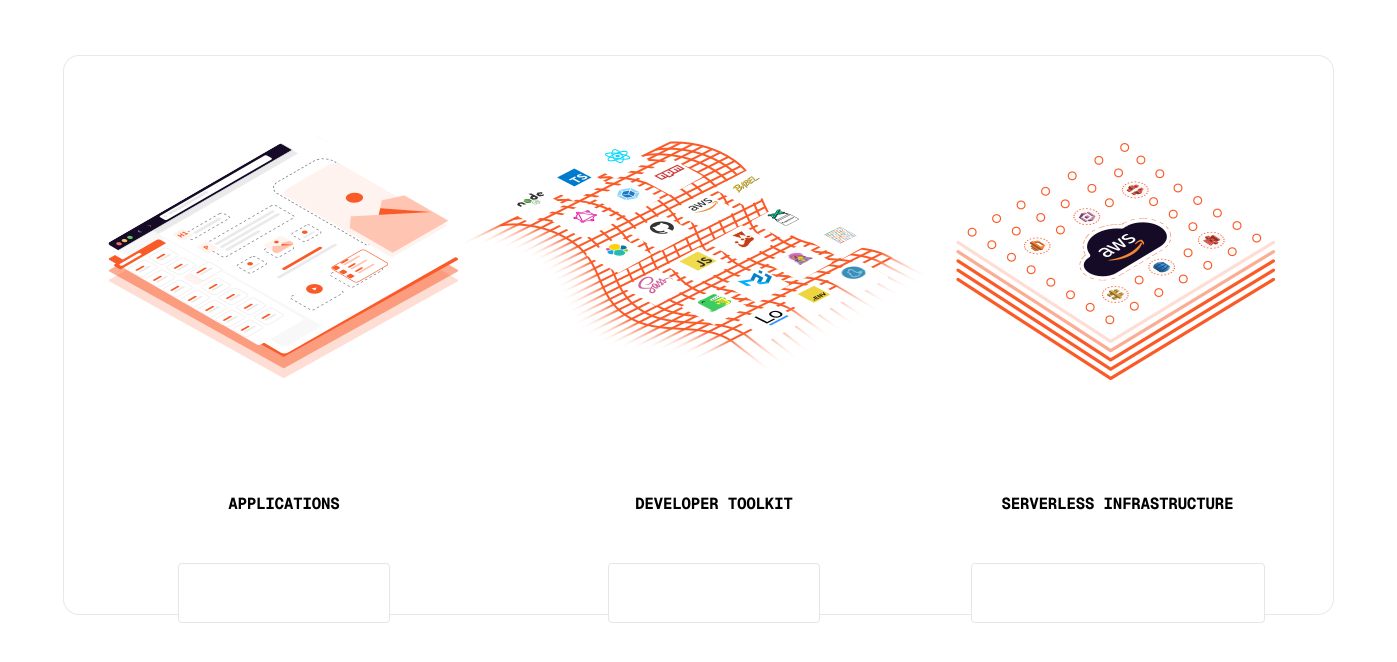
Webiny is a comprehensive, AI-programmable content platform that consists of several key components, each designed to handle specific aspects of content management and application development. In this lesson, we will explore the main parts that make up Webiny and how they work together to provide a seamless experience for both developers and content editors.
In this lesson...
Here are the topics we'll cover
Core components that make up Webiny.
Core Components of Webiny
Webiny is built on a foundation of several core components that work together to provide a robust and flexible content platform. Unlike many other platforms that are monolithic in nature, Webiny is designed from the ground up to be modular and extensible so that it can support even the most complex projects and use-cases. Developers can modify Webiny's functionality as needed in a maintainable and upgrade-safe way, so things don't break between updates.
This architecture is also what makes Webiny especially well suited for modern AI-assisted development. Because Webiny is built on a strongly typed framework, exposes rich lifecycle events, and ships with ready-made apps that are intentionally designed to be extended, AI-generated code tends to fit naturally into the platform. Webiny ships with a built-in MCP server and a curated library of skills that give AI coding agents project-specific context and authoritative how-to guidance — so the agent produces features, integrations, workflows, and UI extensions that follow Webiny's actual patterns instead of inventing parallel ones. We cover that workflow end-to-end in the final chapter, Building with AI Agents and Webiny MCP Server.
The core components that make up Webiny include:
- Applications: Webiny comes with a set of applications that cater to different content management needs, such as the Headless CMS, Website Builder, File Manager, Publishing Workflows, and a few more. These apps are not closed boxes — they are designed to be extended, customized, and adapted to fit your project requirements.
- Developer toolkit: The core of the developer toolkit is the Webiny Framework — the foundation that powers Webiny. It gives you everything you need to build custom applications that plug directly into Webiny — its Admin app and backend services — as well as extend or modify the platform’s built-in features. Because the framework is strongly typed and built around clear extension patterns, it provides an excellent foundation both for direct development and for AI-assisted implementation.
- Infrastructure: Webiny uses Infrastructure as Code principles to define the cloud infrastructure required to run the platform. You don't need to set up or manage any servers, databases, or other infrastructure components manually. Webiny takes care of all that for you, allowing you to focus on building your applications. The whole deployment process is fully automated and done within your own AWS account.
Besides these core components, Webiny also includes a set of developer tools and utilities that facilitate the development process, such as the Webiny CLI, which helps with project setup, deployment, management, scaffolding, CI/CD integration, and more.